
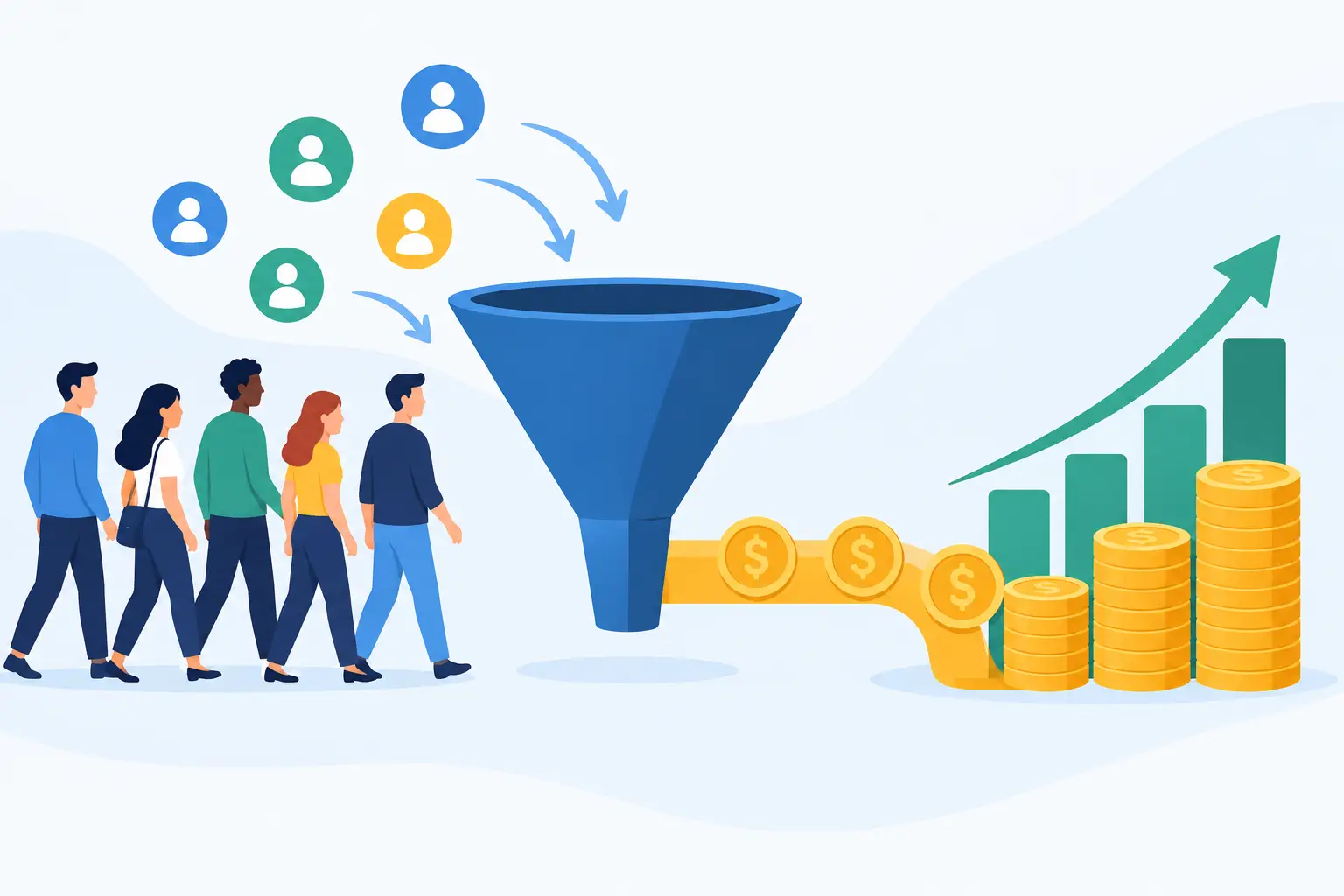
A sales floor with available reps and no fresh conversations is expensive. So is a dashboard full of leads that never answer, cannot qualify, or were sold to five competitors first. Effective customer acquisition is not about collecting the largest possible pile of prospects. It is about creating a dependable system that puts motivated buyers in front of your sales team while protecting acquisition cost and close rate.
For agencies, call centers, lead buyers, and sales organizations in high-pressure verticals, the math is simple: lead flow has to convert. Volume matters, but only when the source, routing, response time, and sales process are aligned. Otherwise, higher spend just creates more waste at scale.
Customer Acquisition Starts With the Right Economics
A lead is not valuable because it is cheap. It is valuable when the revenue it produces exceeds the cost to acquire, contact, qualify, and close it. That sounds obvious, but many campaigns are optimized for cost per lead while ignoring the numbers that actually determine profitability.
Track cost per contact, cost per qualified opportunity, cost per application or quote, cost per sale, revenue per lead, and cancellation or chargeback rates where applicable. These metrics expose whether a channel is truly producing customers or simply filling a CRM.
Consider two sources. Source A generates $12 form leads, but only 35% answer and a small percentage meet underwriting or eligibility requirements. Source B delivers $55 inbound calls from pre-screened consumers, and your team can engage them immediately. Source B may look expensive on a lead-cost report. If it produces materially more applications and funded or issued deals, it can be the lower-cost acquisition channel by a wide margin.
The right decision depends on your sales motion. A mature outbound team may profit from lower-cost data, internet leads, or aged leads when its follow-up discipline is strong. A team that needs immediate conversations may generate better returns from live transfers. Customer acquisition works when the product matches the operational reality of the buyer.
Lead Intent Is the First Conversion Filter
Not every prospect deserves the same budget, speed, or sales effort. Intent separates people who are actively seeking help from people who may recognize your offer but are not ready to act.
High-intent leads typically respond to a recent need. They requested a quote, completed a qualification flow, called after seeing an offer, or engaged with a direct mail campaign. They are not guaranteed buyers, but they have raised their hand. That signal gives a trained sales team something to work with.
Lower-intent data can still have value. Aged leads, targeted lists, and remarketing audiences often work well when you have efficient dialing capacity, compelling offers, and a consistent nurture process. The trade-off is clear: the lower the immediate intent, the more your internal process must do to create urgency and earn the conversation.
This is why buying leads without defining lead standards creates friction. Before launch, establish the fields, qualifiers, exclusions, geography, consent requirements, delivery method, and exclusivity rules that matter to your sales process. If a prospect cannot be worked profitably, it is not a qualified lead regardless of how inexpensive it was.
Define What “Qualified” Means Before Spending
Qualification requirements vary by vertical. An auto finance buyer may need specific credit, vehicle, income, or state criteria. A debt settlement campaign may require minimum unsecured debt and consumer eligibility. A solar campaign may focus on homeownership, utility cost, roof suitability, and location.
Put those requirements in writing. Then review them against actual outcomes, not assumptions. Overly restrictive filters can reduce volume and raise cost. Loose filters can flood the team with conversations that were never viable. The goal is not the tightest filter possible. It is the filter that creates the highest profitable throughput.
Speed to Contact Is a Revenue Lever
A high-intent lead has a short shelf life. The consumer may still be comparing options, completing other forms, or waiting for a competitor to call. Every minute between inquiry and first meaningful contact lowers the advantage you paid to create.
For real-time internet leads, immediate delivery and instant outreach should be the standard. For inbound calls and live transfers, the handoff must be clean, fast, and connected to a rep who can take control of the conversation. A transfer that sits in queue or lands with an unprepared agent loses value quickly.
Fast response alone is not enough. The first interaction should confirm the consumer’s need, establish credibility, and advance a specific next step. That may be a completed application, a verified quote, a document request, or a scheduled appointment. Calls that end with “we will follow up later” are often where expensive acquisition dollars disappear.
Sales leaders should monitor more than average speed to lead. Watch the percentage of records touched within your target window, contact attempts by lead age, answer rates by time of day, and conversion by agent. Averages can hide operational failures. One fast rep does not solve a queue of leads that waited two hours.
Build a Channel Mix Instead of Betting on One Source
A single lead source can perform well until pricing changes, volume drops, compliance rules shift, or market competition intensifies. Dependable growth requires multiple channels that can be managed against the same revenue standard.
Inbound live transfers offer speed and active engagement. Real-time internet leads create scalable opportunities for teams that can respond immediately. Direct mail can drive measurable response in targeted segments, especially where trust and consideration matter. Targeted data and aged leads can improve unit economics for organizations with strong outbound infrastructure.
Each channel has a role. The mistake is treating them as interchangeable.
A direct mail response may produce a different consumer profile than a search-generated call. A live transfer may close at a higher rate but require more budget and tighter agent availability. Aged leads may take more attempts and longer sales cycles, yet deliver attractive returns when worked through a disciplined call center. Channel selection should follow your offer, margin, compliance environment, and capacity to work the lead correctly.
Run controlled tests with clear budget limits and measurement periods. Change one major variable at a time when possible. If lead criteria, creative, call scripts, routing, and agent assignments all change at once, you will not know what caused the result.
Customer Acquisition Requires Sales and Marketing Accountability
Marketing can generate demand, but it cannot close deals from a spreadsheet. Sales can close well, but it cannot overcome a consistently unqualified audience. The highest-performing programs treat acquisition as a shared operating system, not a handoff between disconnected departments.
The marketing side needs visibility into disposition data, close rates, fallout reasons, and revenue by source. The sales side needs clear information about lead origin, consumer intent, expected talking points, and qualification criteria. Both teams need a common definition of success.
This is especially critical when using external lead providers. A provider should be able to explain how opportunities are sourced, what makes them qualified, how quickly they are delivered, whether they are exclusive, and how performance is monitored. Transparency is not a nice-to-have when your sales payroll depends on lead quality.
At the same time, buyers need to own their side of the equation. Poor follow-up, weak scripts, untrained agents, missed calls, and inaccurate CRM dispositions can make a good source look bad. Review call recordings, lead paths, and individual agent performance before writing off a channel.
Measure the Full Funnel, Not Just the Front End
The most useful reporting connects spend to revenue. At minimum, compare source-level volume, contact rate, qualification rate, appointment or application rate, close rate, revenue, and cost per acquired customer. For recurring-revenue or financed products, factor in persistency, defaults, clawbacks, and lifetime value.
This full-funnel view changes decisions. You may find that a source with lower initial conversion produces stronger retained customers. Or you may see that a seemingly strong lead source creates high close rates only because your best agents receive it first. Allocation decisions should be based on repeatable performance, not anecdotal wins.
Scale What Works Without Breaking It
A campaign that works at 50 leads per day may perform differently at 500. More volume can create slower response times, weaker agent availability, broader targeting, and declining quality if the source is stretched too quickly.
Scale in stages. Confirm that the sales team can absorb additional opportunities before increasing spend. Add capacity, tighten routing, expand hours, and maintain quality controls as volume rises. If contact rates decline, investigate response speed and lead saturation before assuming the market has stopped working.
The strongest acquisition programs do not chase a perfect channel. They build a measured, adaptable system that can produce conversations, protect margin, and keep sales teams selling. Lead Flow Partners approaches that system through qualified lead products, real-time delivery, and performance-focused campaign execution built for organizations that need more than activity – they need outcomes.
Your next growth decision should be simple: invest where intent, speed, and sales execution combine to create profitable customers, then hold every part of the process accountable for the result.