

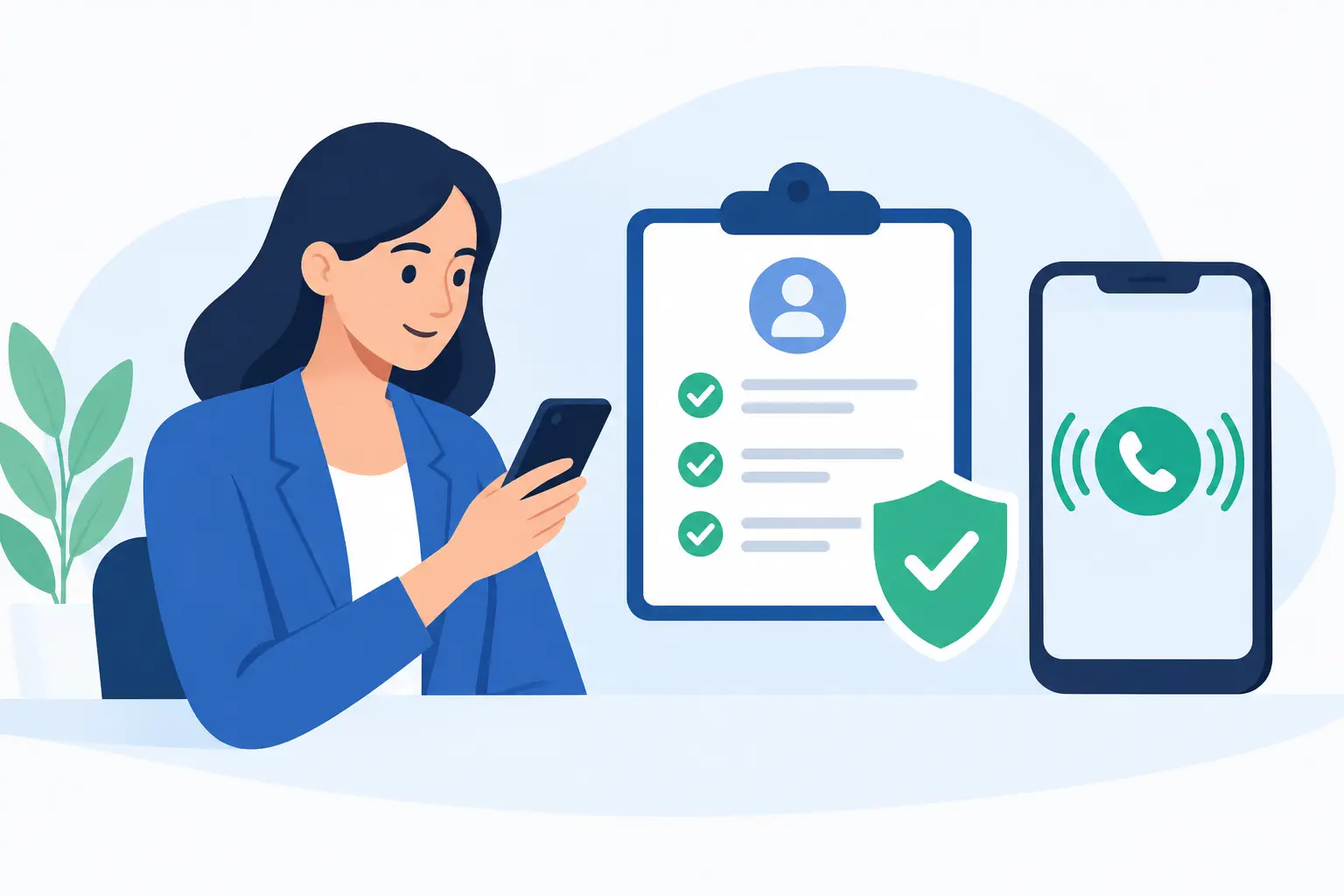
A lead can look perfect on paper: right ZIP code, strong credit profile, recent form fill, immediate need. But if you cannot validate lead consent before the first call or text, that record can become a compliance exposure, a wasted agent conversation, and an expensive hit to campaign performance.
For lead buyers, agencies, and call centers, consent is not a back-office detail. It directly affects connect rates, conversion quality, complaint volume, carrier reputation, and how confidently your sales team can work a file. The goal is simple: know exactly what the prospect agreed to, when they agreed to it, and whether your intended outreach matches that permission.
Why Consent Validation Protects Revenue
Bad lead data does more than create a compliance problem. It slows down the sales floor. Reps spend time arguing with consumers who do not recognize the brand, managers investigate complaints, and campaigns get paused while teams sort through records that should never have entered the dialer.
Validated consent gives sales teams a cleaner starting point. When a prospect recently requested information, saw appropriate disclosure language, and provided permission for the relevant contact method, the conversation begins with context. The agent can focus on qualification, needs analysis, and the close instead of overcoming immediate distrust.
This matters most in high-volume verticals such as insurance, debt relief, mortgage, solar, legal, and financial services. A small percentage of questionable records can create outsized operational risk when thousands of calls or texts are moving through a campaign every day.
Consent validation also protects your vendor relationships. A lead supplier that cannot produce source details, consent language, timestamps, and proof of the consumer action is asking the buyer to carry too much risk. Lead cost is only one part of acquisition economics. The true cost includes agent labor, dialing capacity, compliance review, complaints, and lost opportunity.
What It Means to Validate Lead Consent
Consent is not a single yes-or-no field in a spreadsheet. A phone number marked “opted in” is not enough. Your team needs to confirm whether the lead’s permission is tied to the product, brand, outreach method, and timing of the campaign you plan to run.
The exact requirements depend on the channel and applicable federal and state rules. Calls, prerecorded messages, automated dialing technology, and text campaigns can carry different obligations. Internal policies, carrier rules, do-not-call requirements, and state-level restrictions can add further layers. Your legal and compliance teams should define the standards for your specific program.
From an operational standpoint, a consent record should answer four questions: Who gave permission? What did they agree to receive? Which company or sellers did the disclosure cover? When and where did the action happen?
A usable lead record should include:
- The consumer’s submitted name, phone number, and contact details
- A precise timestamp, including time zone, for the form submission or consent event
- The landing page URL or source path, plus the disclosure language shown at the time
- Proof of the affirmative action, such as a form submission, checkbox event, electronic signature, or call recording where applicable
- Campaign, publisher, and subsource identifiers that trace the lead back to its origin
The point is traceability. If a consumer asks, “How did you get my number?” your team should be able to answer quickly with documentation, not guesses.
Match the Permission to the Outreach
A consumer requesting an insurance quote may have consented to receive calls about insurance quotes. That does not automatically mean the same record is approved for unrelated financial offers, broad remarketing, or a different set of companies.
This is where many lead buyers get exposed. They rely on generic disclosure language, assume a trusted lead vendor covered every use case, or treat a form fill as permanent permission. It depends on what the consumer actually saw and accepted.
Check whether the consent language identifies your company, includes a properly structured seller list where relevant, or otherwise covers the entity making contact. Confirm that the communication type matches your plan. Permission for an agent call is not automatically permission for recurring marketing texts or automated outreach.
If the record changes hands after the original capture, documentation becomes even more important. Each transfer in the supply chain can make the source harder to defend. Exclusive leads with direct, verifiable capture paths generally give buyers more control than heavily resold records with unclear provenance.
Build Consent Checks Into Lead Intake
The best time to catch a consent issue is before a lead reaches your CRM, dialer, or SMS platform. Treat consent validation as a required gate in lead intake, not a cleanup project after the campaign is live.
Start with your acceptance criteria. Define the fields every supplier must pass, the maximum lead age you will accept, the consent language standards required for each channel, and the evidence needed for disputed records. Put these requirements in the insertion order or lead purchase agreement. A vendor’s statement that leads are “TCPA compliant” is not a substitute for data-level proof.
Next, automate the checks that can be automated. Your CRM or lead-routing logic can reject records missing timestamps, source IDs, required disclosures, or valid phone formatting. It can flag leads outside the approved geography, duplicate submissions, outdated inquiries, and records that do not match the campaign’s permitted outreach channel.
Then add human review where it matters. Audit a sample of accepted leads each week, especially when launching a new source, vertical, form path, or publisher. Review the actual consumer journey, not just exported fields. Look at the landing page, the checkbox behavior, the disclosure placement, and the source-to-sale path.
A supplier with legitimate traffic should be able to support this review. If they cannot show the capture flow or treat every request for proof as a problem, do not scale the source until the gap is resolved.
Keep Suppression and Revocation Current
Consent can change after capture. A consumer may opt out, revoke permission, ask not to be contacted, or appear on an internal suppression list after speaking with an agent. Those signals need to move fast across every system that can trigger outreach.
Your process should suppress records before calling, texting, emailing, or reassigning them to another team. It should also update vendors where contractual obligations require it. A disconnected workflow is dangerous: the CRM marks a lead as do-not-contact while an older file remains queued in a dialer or SMS system.
Create one source of truth for suppression status and make sure every connected platform respects it. Test the workflow regularly. A policy that exists only in a compliance document does not protect a live campaign.
Measure Consent Quality Like Lead Quality
Lead buyers already track cost per lead, contact rate, appointment rate, close rate, and customer acquisition cost. Add consent quality to that scorecard.
Watch complaint rates by source, opt-out rates by campaign, wrong-party contacts, consumer recognition of the offer, and the percentage of leads with complete consent documentation. Compare those metrics against revenue performance. A cheap source with weak consumer recognition may produce a low CPL while quietly increasing agent waste and risk.
The strongest suppliers are not always the ones with the lowest front-end price. They are the ones that can deliver high-intent prospects, document the journey, and maintain consistent source-level performance as volume grows.
For live transfers, validation needs to happen even earlier. The consumer should understand why they are being connected and what kind of specialist will speak with them. The handoff should preserve the consumer’s stated need, location, and contact permission. A warm transfer with no consumer awareness may create a high connection rate, but it will not create sustainable conversion performance.
Questions to Ask Every Lead Vendor
Before increasing spend, ask direct questions. Where was the lead generated? Can you provide the exact disclosure language and version history? Is the buyer named or covered in the consumer’s consent? What proof is available for each record? How quickly can you retrieve it for a complaint or dispute?
Also ask whether leads are exclusive, whether they are resold, and how long they can remain in circulation. Aged lead campaigns can still have a role in certain sales motions, but they require different expectations and tighter controls. The older the record, the more carefully you need to assess whether outreach remains appropriate under your program rules.
Finally, ask how the supplier handles fraud, duplicate submissions, opt-outs, and publisher monitoring. Consent proof is only as reliable as the traffic quality and controls behind it.
Lead Flow Partners approaches lead supply as a conversion system, not a file-delivery exercise. That means the source, intent, routing, and sales readiness all matter. Consent verification belongs in the same operational conversation as speed-to-lead, agent capacity, and close ratios.
The sales floor should never have to wonder whether a lead asked to hear from you. Build that answer into the record before the dialer starts, and your team can spend more of its day doing what drives revenue: creating conversations with prospects who are ready to move.