

Search Blog, projects, Service or people.

Contact info

Location
810 Pony Express Rd, Cheyenne, WY 82009

Follow us

How to Scale Outbound Campaigns Without Killing ROI

How to Scale Outbound Campaigns Without Killing ROI

Authored by
Admin
Date Released
11, Nov, 2026
Comments
03 Comments

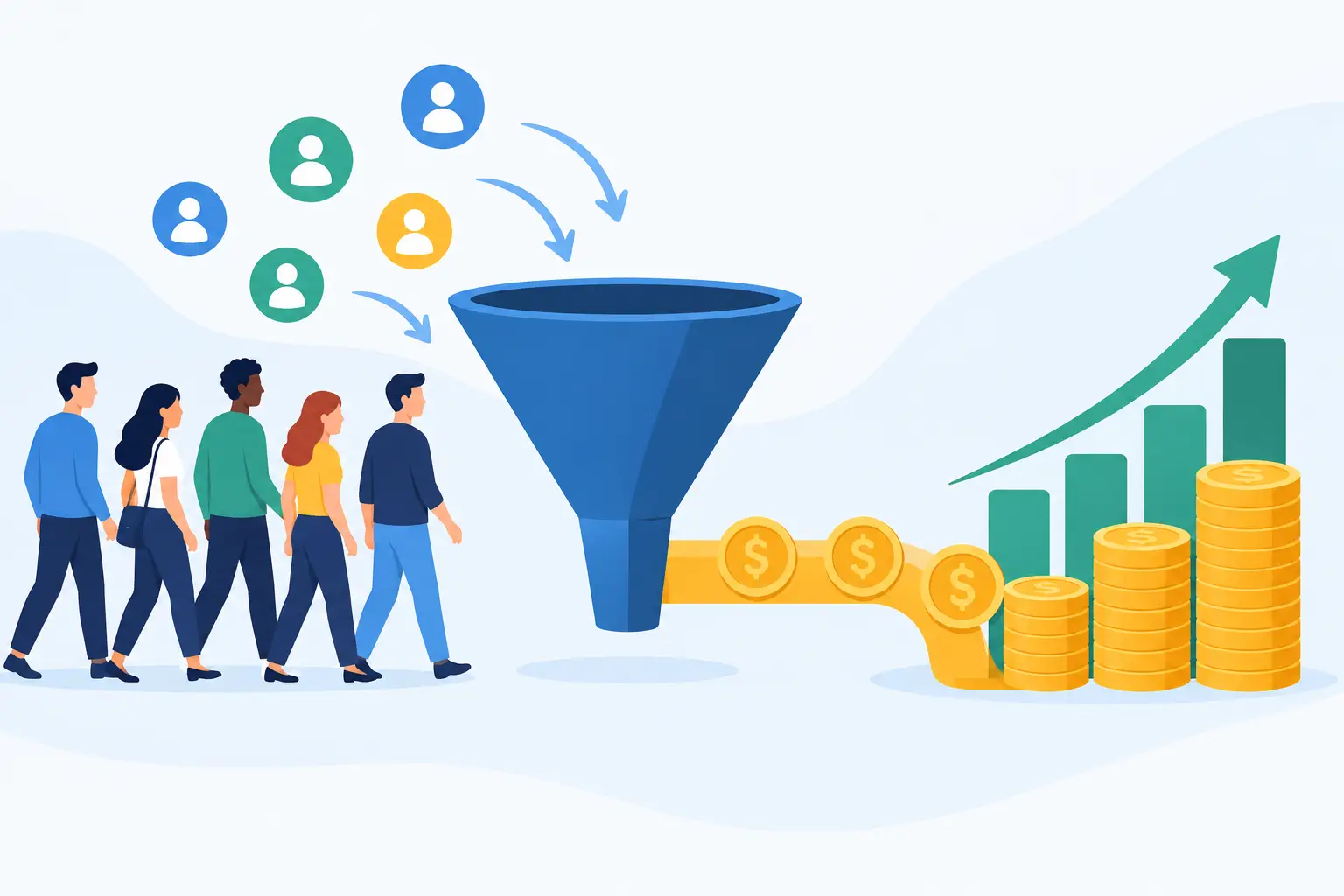
Outbound does not fail because a sales team needs more volume. It fails when volume reaches the team faster than the operation can qualify, contact, and convert it. Knowing how to scale outbound campaigns means building a system that can produce more opportunities without driving up acquisition cost, exhausting reps, or lowering close rates.

For lead buyers, agencies, call centers, and sales organizations, scaling is not a matter of uploading a larger list or increasing spend. It is a controlled expansion of data, messaging, delivery, staffing, and measurement. If one part breaks, the campaign becomes more expensive at exactly the point it should become more profitable.

Start With a Campaign That Already Converts

Do not scale a campaign because it generated activity. Scale it because it produces profitable customer acquisition at a repeatable level. A high dial count, strong click-through rate, or a low cost per lead is meaningless if sales cannot turn those contacts into revenue.

Before adding volume, establish a clear baseline. Track delivered leads or contacts, contact rate, qualification rate, appointment rate, close rate, average revenue per sale, cost per acquisition, and speed to lead. These numbers tell you where growth will create value and where it will create waste.

A campaign with a 12% contact rate may have a data or timing problem. A campaign with a strong contact rate but weak close rate may be reaching the wrong audience or setting the wrong expectation. Scaling either one before fixing the leak simply purchases more of the same problem.

The first question is not, “How many more leads can we buy?” It is, “What happens after a qualified prospect enters our system?” If the answer is unclear, scale will expose it fast.

Build the Data Strategy Before Increasing Volume

Outbound performance starts with targeting. Bigger databases do not automatically produce bigger results. In competitive markets such as insurance, consumer finance, legal services, home services, and funding, broad targeting often creates a surge of low-intent conversations that burn agent time and budget.

Segment contacts by factors that actually affect conversion: product fit, geography, consumer profile, recency, known buying signals, prior engagement, and compliance status. The right segments differ by vertical. A mortgage buyer may care about credit profile, equity position, and recent inquiry behavior. A merchant cash advance campaign may prioritize business age, revenue indicators, and financing intent.

Recency matters. A prospect who showed interest yesterday is not equivalent to someone whose information was collected months ago. Aged data can still create value when priced correctly and matched to the right follow-up strategy, but it should not be measured against real-time opportunities as if they are the same product.

As volume grows, protect data quality with suppression processes, deduplication, consent verification where required, and source-level reporting. You need to know which source, segment, and campaign generated every meaningful outcome. Without that visibility, lower-quality volume hides inside blended averages until your cost per acquisition spikes.

Scale Outbound Campaigns in Controlled Increments

The fastest way to lose control is to double spend, add a new list source, launch new scripts, and hire new agents in the same week. When performance changes, you will not know what caused it.

Scale in increments large enough to produce useful data but small enough to limit exposure. For many teams, that means increasing a proven segment or channel by 15% to 30%, then monitoring performance through a complete sales cycle. The appropriate window depends on your sales velocity. A same-day transfer campaign can be evaluated quickly. A high-ticket financial product with a 30-day close cycle requires more patience.

Change one major variable at a time. Add volume to your best-performing segment before expanding audience criteria. Test a new message against the current control before rolling it across every agent. Increase staffing only after the team has demonstrated it can maintain response times and quality standards at the new level.

This approach is less exciting than a major launch, but it gives operators something better: answers. You can identify the point where marginal lead quality starts declining, where agent capacity tightens, and where a new source begins adding profitable scale.

Match Lead Speed to Sales Capacity

Speed to lead is one of the most underpriced levers in outbound execution. When a prospect has recently requested information, submitted a form, or engaged with an offer, every minute of delay lowers your odds of making a productive connection.

That does not mean every business needs a massive internal call floor. It means your delivery model must match your follow-up capability. Real-time internet leads and live transfers are powerful when agents can respond immediately. If your team cannot work fresh opportunities within minutes, buying more of them may reduce return rather than improve it.

Create clear routing rules. High-intent prospects should reach the next available qualified agent, not sit in a generic queue. Lower-intent or aged records can enter structured call, SMS, and email sequences. Keep ownership visible so leads do not get bounced between reps or contacted inconsistently.

Capacity planning should be grounded in actual production. Measure how many new opportunities an agent can work per day while maintaining acceptable call attempts, talk time, follow-up discipline, and conversion performance. Then add a buffer for no-shows, attrition, training time, and peak delivery hours. A team that is technically staffed for average volume but overwhelmed during prime contact windows will lose the leads that matter most.

Keep Messaging Consistent, Not Rigid

As outbound teams scale, messaging often fractures. One group uses a strong qualifying opener, another leads with a discount, and a third makes promises the fulfillment team cannot support. That inconsistency damages both compliance and conversion.

Give agents a proven framework rather than a word-for-word script they cannot adapt. The framework should establish the reason for the call, confirm relevance, ask a qualifying question, communicate a specific value, and move the prospect toward the next step. It should also define what agents cannot claim.

Record and review calls from top performers, average performers, and new hires. Look for the specific moments where quality changes: how the rep handles objections, confirms eligibility, creates urgency, or transitions to an appointment. Turn those patterns into coaching, not just a scorecard.

Message testing still matters at scale. Test one element at a time, such as the opening line, offer framing, call time, or objection response. The goal is not creative variety. The goal is a measurable lift in connection, qualification, or close rate.

Measure Profitability at the Source Level

A campaign can look healthy in aggregate while one source destroys margin. Blended reporting is useful for executive visibility, but operators need a deeper view.

Review performance by lead source, audience segment, delivery type, campaign, agent, call window, and disposition. Tie those records to downstream outcomes, not just initial conversations. A source that produces cheap leads but weak sales is not cheaper. It is more expensive because it consumes labor and opportunity cost.

Your core scorecard should answer four questions:

  • Which sources create the most revenue per delivered opportunity?
  • Which segments maintain quality as volume increases?
  • Where does speed to lead decline and affect contact rates?
  • Which agents or teams convert specific lead types most effectively?

Use the answers to shift budget toward proven inventory, pause underperforming sources quickly, and match lead types to the teams best equipped to close them. This is how a campaign moves from buying leads to managing a real acquisition engine.

Add Channels Only When They Support the Same Goal

Outbound scale does not have to mean more calls. SMS, email, direct mail, and live transfer campaigns can improve contact rates and create multiple paths to conversion. But adding channels without coordination creates duplicate touches, mixed messaging, and compliance exposure.

Build a contact strategy around intent and timing. A fresh online inquiry may justify an immediate call and a confirming text. A prospect who has not responded to calls may be more likely to engage after a direct-mail touch or a short SMS follow-up. Different channels should reinforce the same offer and handoff, not compete with each other.

Lead Flow Partners approaches this as a delivery and conversion problem, combining targeted data, real-time opportunities, direct mail, SMS capabilities, and domestic call center support when the campaign requires more operational firepower. The right mix depends on your sales process, compliance requirements, and ability to act quickly on each response.

Protect Quality as You Grow

The real test of scale is whether your economics hold when volume rises. Watch for early warning signs: declining contact rates, longer lead response times, more duplicate records, lower appointment show rates, rising refunds, or agents cherry-picking only the easiest prospects.

When those signals appear, do not assume the answer is another list vendor or more ad spend. Audit the entire handoff. Review source quality, lead definitions, routing, staffing, scripts, follow-up cadence, and closing process. Often, the issue is not a lack of demand. It is a mismatch between the opportunity being generated and the operation assigned to convert it.

Profitable outbound growth comes from disciplined expansion, not blind volume. Build the controls first, increase delivery with intent, and let revenue per opportunity decide what deserves more budget.
Tags: Leads
Share:

How to Qualify Insurance Leads Before Sales Calls

How to Qualify Insurance Leads Before Sales Calls

Authored by
Admin
Date Released
09, Nov, 2026
Comments
03 Comments

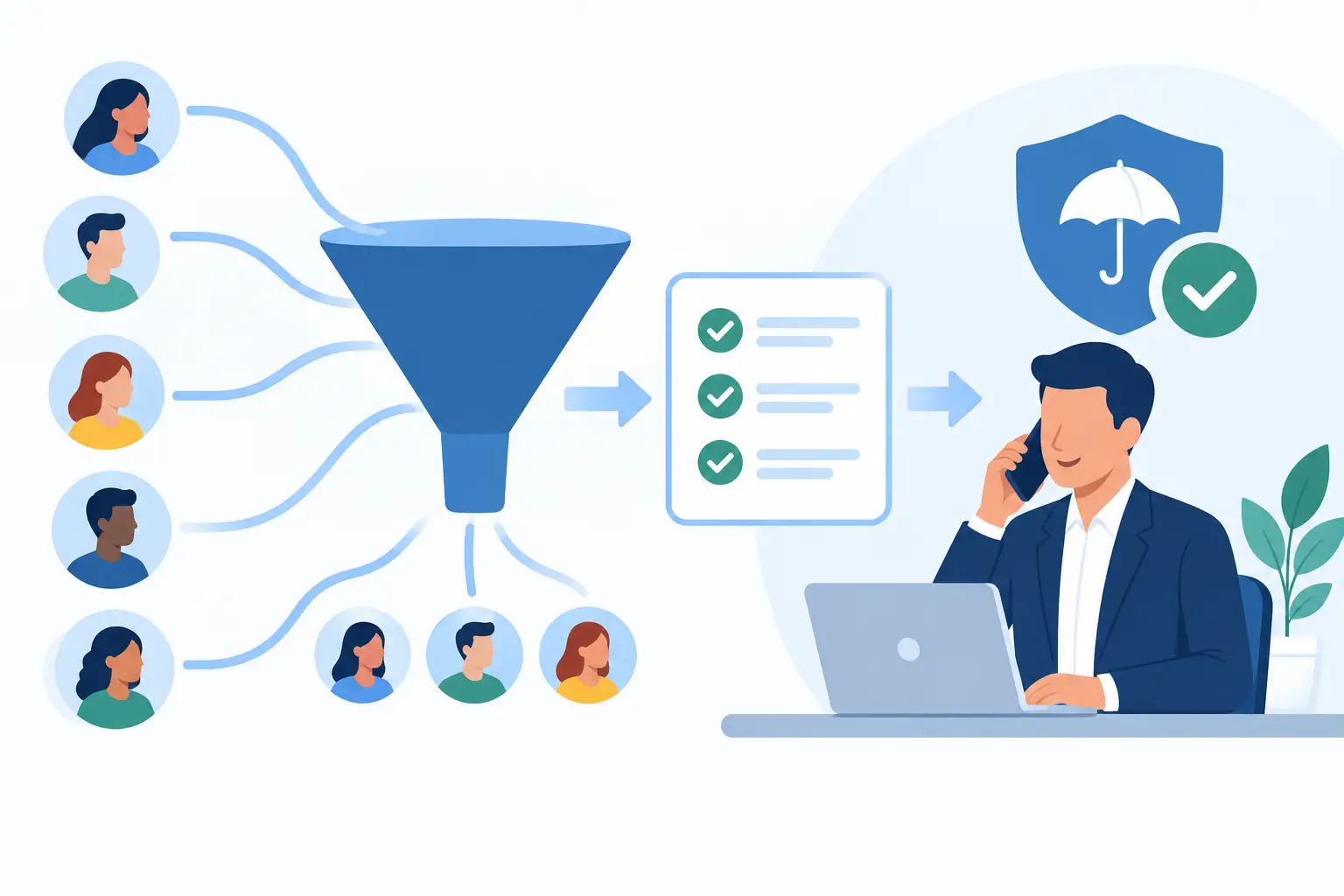
A lead form submission is not a sales opportunity. In insurance, that gap is where margins disappear. A consumer can request a quote with no current policy, no buying authority, an invalid phone number, or no intention of speaking with an agent. To qualify insurance leads effectively, you need to identify who can buy, who is ready to act, and who your team can actually reach before costly sales labor is spent.

The goal is not to reject every imperfect prospect. It is to route the right prospects to the right sales motion, protect agent talk time, and make your acquisition cost produce bindable business.

What Makes an Insurance Lead Qualified?

A qualified insurance lead meets a defined standard for fit, intent, timing, and contactability. The exact threshold depends on the line of business, carrier appetite, geography, and sales model. A life insurance lead and an auto insurance lead should not be scored the same way. Neither should a live transfer and an aged internet lead.

Start with fit. The prospect must be eligible for the product you sell. For auto insurance, that can mean a valid ZIP code, licensed driver status, vehicle details, and coverage needs within your carrier mix. For health insurance, it may include state, age, household information, enrollment timing, and whether the consumer is seeking a qualifying plan type.

Intent comes next. Did the consumer actively request quotes, or did they enter a sweepstakes-style form and consent to marketing as an afterthought? High-intent leads typically show clear shopping behavior: they requested insurance information, completed relevant fields, chose a coverage category, and agreed to be contacted.

Timing separates a future opportunity from an immediate sales conversation. Someone whose policy renews next week deserves a different response than someone who says they are “just looking” and will revisit coverage in six months. Both may have value, but only one belongs in an urgent call queue.

Finally, a lead has to be reachable. Accurate phone numbers, verified contact data, appropriate consent, and fast response windows matter. A perfectly matched prospect is worth little if your agents cannot connect with them.

Qualify Insurance Leads With Questions That Predict a Quote

Every question in your lead flow should earn its place. Long forms can reduce completion rates. Short forms can send sales teams too much noise. The right approach is to ask for the minimum information needed to determine eligibility and prioritize follow-up.

For most insurance campaigns, qualification should establish the prospect’s location, product need, basic risk or household profile, current coverage situation, renewal or purchase timeline, and preferred contact method. It should also confirm that the consumer understands they are requesting insurance information, not simply entering to win something or downloading unrelated content.

Use progressive qualification when more detail is needed. Capture the core facts on the initial form, then collect secondary information through a confirmation page, SMS exchange, verification call, or live transfer flow. This reduces friction without forcing agents to start every conversation from zero.

Ask About the Current Policy Situation

A consumer’s current policy status often reveals urgency faster than a generic question about interest. Are they uninsured? Are they facing a premium increase? Did they recently buy a vehicle or move to a new state? Is their policy renewing within 30 days?

These answers create useful sales context. A prospect trying to replace canceled coverage requires fast, informed handling. A prospect comparing rates ahead of a renewal may be an excellent lead, but the follow-up sequence should match their decision timeline.

Capture Decision-Making Authority

The person filling out the form is not always the person who can approve coverage. For household policies, commercial insurance, or family health plans, establish whether the prospect is the policyholder or a decision-maker. This is especially valuable for call centers where agent time is measured closely.

Do not overcomplicate the question. A simple prompt about who makes insurance decisions can prevent repeated follow-ups to a contact who cannot move the purchase forward.

Confirm Contact Preferences and Consent

Contactability is not just a data issue. It is an operational and compliance issue. Your process should capture the required consent language, timestamp, source, IP data where applicable, and contact preferences needed for your outreach model.

A lead supplier should provide transparent delivery details. If you cannot see when the lead was generated, what form it completed, the source channel, and what it consented to, your team is operating blind. That lack of visibility makes it harder to optimize campaigns and harder to protect your operation.

Score Leads by Revenue Potential, Not Form Completion

A completed form should not automatically receive the same value as every other completed form. Scoring gives your team a practical way to separate immediate opportunities from leads that need nurturing.

A simple scoring model can assign weight to factors such as policy renewal date, verified phone status, product fit, geographic eligibility, requested coverage, current premium pain, and stated purchase timeframe. A prospect with a verified number, an expiring policy, and an active quote request should rise to the top of the queue.

The point is not to build an overly complicated model nobody uses. Start with the factors that have a proven connection to contact rate, quote rate, and bind rate. Review results weekly. If leads marked as “high intent” are not producing quotes, the scoring rules or lead source need attention.

Your CRM should support this process with clear statuses. Avoid vague labels such as “good lead” or “bad lead.” Track reasons for rejection and disposition: out of market, duplicate, invalid contact data, no current need, ineligible risk, no answer, quoted, or bound. This feedback is what allows media buyers and lead partners to improve quality instead of merely increasing volume.

Speed to Lead Is Part of Qualification

The value of an insurance lead declines quickly after submission. A consumer comparing policies may submit multiple quote requests in a short window. The first agent to make relevant contact often gets the best chance to quote and close.

That is why live transfers can outperform standard web leads for campaigns that need immediate conversations. The consumer has already shown intent, completed initial screening, and agreed to speak with an agent. A real-time internet lead can also perform well, but only when your team has the staffing and automation to respond within minutes.

Aged leads serve a different purpose. They can be productive when purchased at the right cost and worked through a disciplined outbound process, but they should not be priced or treated like fresh, exclusive opportunities. The trade-off is lower acquisition cost against lower initial contact and conversion rates.

Match lead delivery to your sales capacity. If your agents are unavailable during peak response periods, buying more fresh leads will not fix the problem. It will simply create more missed opportunities.

Audit the Source Before You Scale

Lead quality begins before a record enters your CRM. Ask how the traffic is generated, whether leads are exclusive or shared, what verification steps are used, and how duplicates are controlled. Ask whether campaign targeting can be adjusted based on your actual bind data.

A vendor that only reports lead count is not managing performance. You need visibility into source, delivery time, lead age, contact rate, quote rate, and cost per bound policy. The lowest cost per lead can become the most expensive channel when agents spend hours chasing consumers who never requested coverage.

For high-volume buyers, campaign control matters as much as lead quality. You should be able to set geography, product criteria, hours of delivery, daily caps, and pacing rules. These controls prevent your team from paying for leads it cannot service or cannot place.

Lead Flow Partners approaches this as a performance problem, not a volume contest. The right combination of real-time leads, live transfers, targeted data, and follow-up infrastructure depends on what your sales floor can convert profitably.

Build a Feedback Loop Between Sales and Acquisition

Marketing cannot qualify in isolation. The sales team sees the real objections, carrier limitations, contact issues, and policyholder concerns that form data never captures. If that information stays in call notes, lead generation will keep repeating the same expensive mistakes.

Create a regular review of lead outcomes by source and segment. Look beyond close rate alone. Compare speed to first contact, contact rate, quote rate, show rate where applicable, issued policy rate, cancellation rate, and customer acquisition cost. A source with a slightly higher price may be the better buy if it consistently produces policies that stay on the books.

Then act on the findings. Tighten targeting, revise questions, exclude weak ZIP codes, change delivery hours, adjust scoring, or route certain lead types to specialists. Qualification is not a one-time filter. It is an operating system that improves as sales data comes back.

The next time lead volume looks strong but revenue does not, do not ask only for more leads. Ask which prospects are reaching your agents, how quickly they are contacted, and whether your definition of “qualified” matches the policies your business can actually write.

Tags: Leads
Share:

Insurance Lead Quality Case: What Converts

Insurance Lead Quality Case: What Converts

Authored by
Admin
Date Released
07, Nov, 2026
Comments
03 Comments

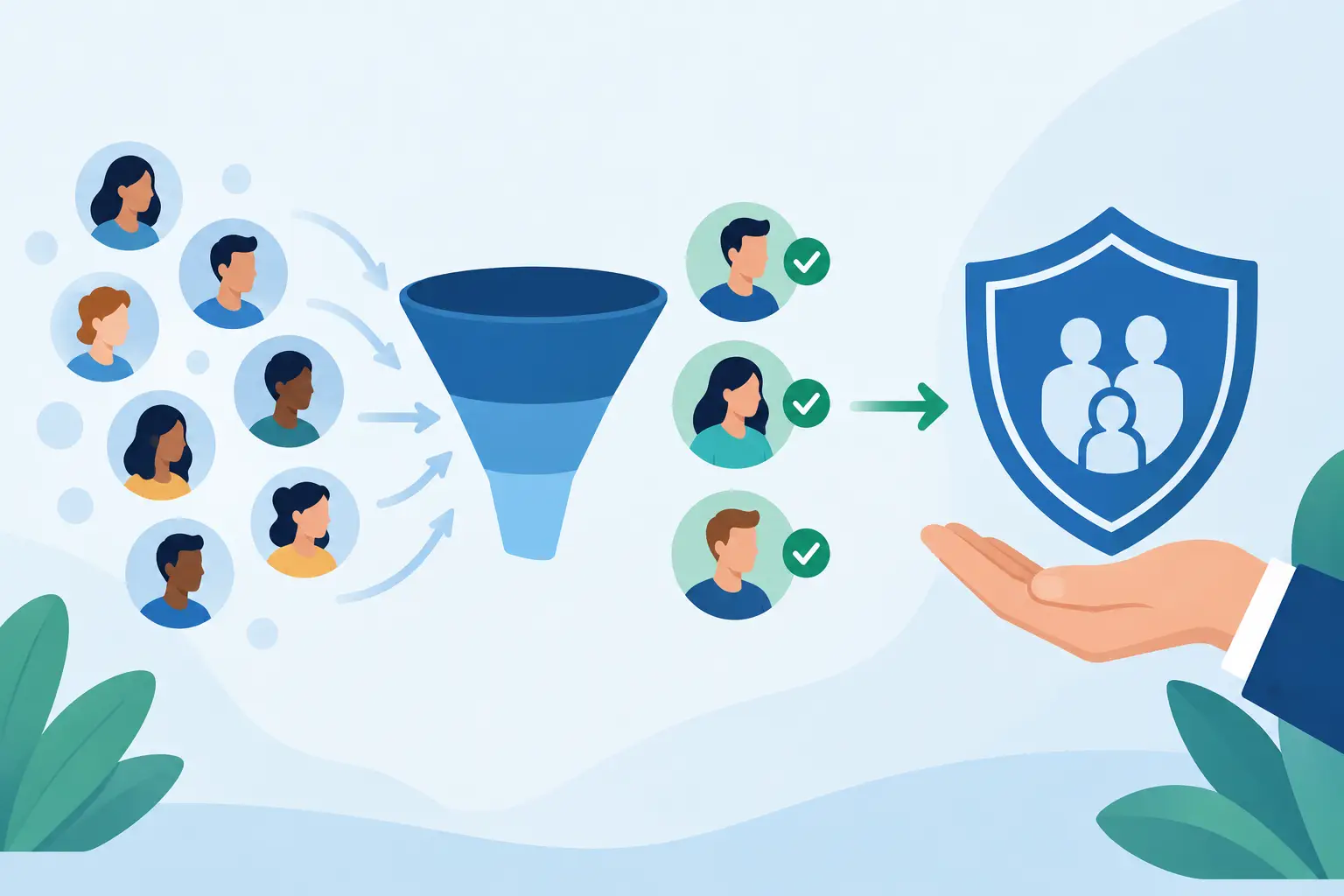
A cheap insurance lead is only cheap until your agents spend hours chasing it, your contact rate drops, and your acquisition cost climbs anyway. The insurance lead quality case is not about paying the highest price per record. It is about buying opportunities your team can contact, quote, and convert at a profitable rate.

For agencies, carriers, call centers, and performance marketers, that distinction determines whether lead volume creates pipeline or creates payroll waste. More form fills do not fix a weak sales funnel. Better qualification, faster delivery, and clean feedback do.

The Insurance Lead Quality Case Starts With Economics

Lead quality should be measured against revenue, not against the lead price shown on an invoice. A $12 lead that produces no conversations is more expensive than a $35 lead that connects quickly and generates issued policies. The right question is not, “What is our CPL?” It is, “What does a bound policy cost us by source, campaign, and lead type?”

Start with the metrics that expose the full path from acquisition to revenue: speed-to-lead, contact rate, quote rate, application rate, bind rate, premium value, cancellation rate, and cost per bound policy. These numbers tell you whether a source is producing people who are merely curious or prospects actively shopping for coverage.

A lead source can look strong at the top of the funnel and still fail commercially. For example, a campaign may generate high form completion rates because its offer is broad and low-friction. If applicants are not eligible, do not recognize the inquiry, or are only seeking a rough price estimate, agents will pay for the gap later. Quality is where that gap gets closed.

Define a Qualified Lead Before You Buy One

There is no universal definition of a quality insurance lead. Auto insurance buyers may need valid vehicle, driver, and coverage information. Health insurance campaigns may require eligibility details, enrollment timing, and permission to contact. Life insurance teams often care more about age band, tobacco status, coverage need, and phone verification.

The definition must match the product and the sales motion. A high-volume call center with immediate dialing capacity can profit from leads that require more screening. A smaller agency with limited producers may need tighter filters and fewer records. Neither model is wrong, but buying the same lead type for both is a recipe for poor returns.

Put the qualification standard in writing. Specify required fields, geography, age or eligibility criteria where applicable, consent language, duplicate rules, delivery timing, and what makes a lead invalid. If a vendor cannot explain these mechanics clearly, it will be difficult to diagnose performance when results soften.

Intent Beats Volume When Agents Need to Close

Insurance shoppers sit at different levels of intent. Someone reading general coverage information is not equivalent to a consumer who requests a quote, confirms a callback, and supplies details needed to rate a policy. Treating both as the same inventory category distorts your forecasting.

Higher-intent leads often cost more because the publisher, media buyer, or call operation has invested more to identify and qualify them. That premium can be justified when it improves contact rates and shortens the path to a quote. It can also be wasted if your sales team does not respond fast enough or lacks the capacity to work the volume.

This is why inbound live transfers can outperform standard internet leads for teams built to answer now. The prospect is already engaged and expects a conversation. Real-time form leads can work extremely well when your dialer, SMS workflow, and agent availability support immediate follow-up. Aged leads can produce profitable results too, particularly for disciplined outbound teams, but they demand a different cost model and persistence level.

The channel is not the quality score. The fit between the channel and your operation is.

Speed-to-Lead Protects the Value You Paid For

A lead loses value by the minute when multiple advertisers are trying to reach the same consumer or when the buying window is short. Insurance shoppers may request several quotes in one session. If your first call happens three hours later, the prospect may have already spoken with competitors, received a quote, or simply moved on.

Measure lead receipt to first call attempt, not just lead receipt to assignment. A lead can enter your CRM instantly and still sit untouched because of routing failures, staffing gaps, or unclear ownership. For real-time internet leads, the goal should be near-immediate outreach. For live transfers, the operational requirement is even simpler: answer the call with a trained, available licensed agent or closer.

Speed alone will not rescue bad traffic. But slow response can make a good source look bad. Before replacing a vendor, confirm that your internal handling is not the actual conversion problem.

Clean Data Prevents Expensive Agent Waste

Bad phone numbers, duplicate submissions, mismatched state data, missing fields, and unclear consent are not minor administrative issues. They directly reduce productive talk time and inflate cost per sale. Your agents should be selling coverage, not fixing records.

Demand transparency around how data is captured and validated. Ask whether phone verification is used, how duplicates are suppressed, whether leads are exclusive or shared, and how quickly information is delivered. For compliance-sensitive insurance campaigns, confirm that consent capture, contact permissions, and suppression processes align with your legal and operational requirements.

Exclusivity deserves a closer look. Exclusive leads can give your team a cleaner shot at the prospect, but exclusivity does not automatically mean intent. A low-intent lead sold to only one buyer is still low intent. Shared leads can work when they are priced correctly, delivered fast, and supported by an aggressive contact strategy. The economics decide, not the label.

Build a Closed-Loop Quality Scorecard

The fastest way to improve lead quality is to send conversion data back to the source. Too many buyers judge vendors only by invalid lead counts or first-week contact rates. Those are useful signals, but they do not show which audiences, creatives, placements, and qualification paths produce bound business.

Create a source-level scorecard that follows each cohort through the funnel. Separate performance by product line, geography, daypart, campaign, publisher, lead age, and delivery method where volume supports it. Averages hide opportunity. One state, traffic source, or call window may be carrying the campaign while another quietly drains budget.

Your vendor should receive clear feedback: contacted, quoted, not eligible, duplicate, no answer, sold, canceled, and any meaningful disposition reason. The goal is not to burden your operations team with reporting. The goal is to give media buyers enough signal to cut poor traffic and scale what converts.

There is a trade-off here. Over-filtering can reduce volume so sharply that growth stalls. Under-filtering can keep volume high while agents lose confidence in the program. Test changes in controlled increments, then judge them on cost per issued or bound policy rather than on lead count alone.

Separate Vendor Quality From Sales Execution

When close rates fall, lead providers are often blamed first. Sometimes that is exactly right. Other times, the issue is agent turnover, a script change, weak follow-up, carrier appetite, pricing shifts, or a CRM routing problem.

Review performance in a way that makes the cause visible. Compare agents working the same source. Compare the same agent across sources. Track contact attempts and response time before declaring traffic unqualified. Listen to transfer calls and review a sample of records marked as poor quality. A disciplined review protects your budget and keeps strong sources from being cut based on incomplete data.

Buy for the Sales System You Actually Have

The best lead program is designed around your available capacity, not your ideal capacity. If you can answer and quote live calls, prioritize immediacy. If your team excels at high-volume outbound follow-up, build campaigns around real-time forms, targeted data, or aged opportunities with clear segmentation. If agent capacity is constrained, tighten qualification and cap daily delivery instead of flooding the floor.

Lead Flow Partners approaches this as an execution problem: match the delivery channel, filters, and volume to the revenue target and the team responsible for closing it. That means monitoring performance after launch, not treating lead delivery as the finish line.

Start with one hard question: can your team prove which lead sources create bound policies at a scalable cost? If the answer is no, do not buy more leads yet. Build the measurement, response process, and feedback loop that allow good opportunities to show their value. Then scale the sources that keep your agents talking to people who are ready to buy.

Tags: Leads
Share:

Lead Qualification Workflow That Drives Closers

Lead Qualification Workflow That Drives Closers

Authored by
Admin
Date Released
05, Nov, 2026
Comments
03 Comments

A $40 lead that reaches the right rep in 30 seconds can outperform a $15 lead that sits untouched for 20 minutes. That is why a lead qualification workflow is not an administrative task. It is a revenue-control system that determines who gets called, how fast they get called, and whether your sales team spends its time on buyers or browsers.

For agencies, call centers, and high-volume sales organizations, the difference shows up quickly in contact rates, close ratios, cost per acquisition, and agent productivity. More volume does not fix a weak process. It usually makes the waste more expensive.

What a Lead Qualification Workflow Must Accomplish

A lead qualification workflow is the set of rules, data checks, routing actions, and human conversations used to decide whether a prospect belongs in your sales pipeline. The goal is not to disqualify as many people as possible. The goal is to identify the prospects with a real need, a viable path to purchase, and a reasonable chance of converting now.

In competitive verticals such as insurance, debt settlement, mortgage, solar, auto finance, and merchant cash advance, qualification has to happen at speed. Interest decays fast. A consumer requesting information may also be filling out forms with multiple providers. If your team cannot validate intent and connect quickly, another buyer will.

A strong workflow answers four operational questions before a sales rep invests serious time: Is the prospect real? Does the prospect fit the offer? Is there active intent? Can the prospect be reached and advanced now?

That sounds straightforward, but the answer changes by vertical. A homeowner’s credit range, state, utility bill, and roof condition may matter in solar. A funding buyer may need to meet time-in-business and revenue thresholds. An insurance prospect may need a specific coverage type, active phone number, and consent status. Qualification criteria should reflect the economics of the offer, not a generic scoring template.

Start With the Revenue Definition of a Qualified Lead

Many campaigns fail because marketing, sales, and operations use different definitions of “qualified.” Marketing may count a completed form. Sales may only count a live conversation with a decision-maker. Finance may only care about issued policies, funded deals, or retained customers.

Set the definition from the bottom of the funnel and work backward. Look at your best customers from the last 60 to 90 days. What facts were consistently true before they closed? Which lead-source attributes, consumer answers, call behaviors, and timing signals correlated with revenue?

Then separate qualification into three levels. A valid lead has accurate contact information, required consent, and no obvious duplicate or fraud signal. A sales-qualified lead meets the core eligibility requirements and has confirmed interest. A conversion-ready opportunity has connected with the right sales motion, whether that means a live transfer, scheduled appointment, or immediate agent follow-up.

This distinction matters because a form fill is not automatically a sales opportunity. Treating every submission as one makes lead sources look worse than they are and hides where the actual breakdown occurs.

Build the Workflow Around Speed and Verification

The first minutes after a lead is generated carry disproportionate value. For inbound campaigns, the best workflow often verifies the prospect and offers a live connection while intent is still high. For real-time internet leads, the system should push the lead to the correct team immediately, trigger the first outreach attempt, and create a visible ownership record.

Speed alone is not enough. Calling an unverified number, routing a duplicate, or sending an ineligible consumer to a closer wastes capacity. The right model combines automated checks with targeted human confirmation.

Your automated layer should validate the fields that can be checked instantly: phone format and carrier status, email syntax, geographic availability, duplicate history, source tracking, consent capture, and campaign-specific eligibility. If a prospect fails a hard requirement, suppress or recycle the record before it reaches a rep.

The human layer should handle what data cannot reliably prove. Is the prospect actively shopping? Do they understand the offer? Are they the decision-maker? Is the stated need real and urgent? A short verification call or live transfer screen can answer these questions without turning qualification into an interrogation.

Do not overbuild the intake. Every additional question creates friction and abandonment. Ask only for information that changes routing, eligibility, pricing, or the next sales action. If a field does not affect a decision, it probably does not belong in the initial flow.

Route by Fit, Not Just Availability

The common mistake is routing every lead to the next available rep. That approach may maximize dial activity, but it does not maximize revenue. A better model routes based on the combination of product fit, licensing or geography, lead value, language needs, rep skill, and current capacity.

A high-intent prospect with a short decision window should not enter the same queue as an older record that needs nurture. A Spanish-speaking insurance shopper should reach a qualified bilingual agent. A prospect seeking a specialized funding product should go to a team that understands the underwriting criteria rather than a general queue.

This is where lead scoring can help, provided it remains practical. Assign more weight to signals tied to outcomes: recent form completion, requested callback window, verified phone, qualifying income or revenue range, geographic fit, and stated urgency. Give less weight to vanity signals that look useful but do not predict a conversation or sale.

Scoring should influence action, not become a reporting exercise. A top-tier lead might trigger a live transfer and repeated same-day follow-up. A middle-tier lead might enter a fast callback sequence. A lower-tier but valid lead might be delivered to an outbound nurture team or retained for compliant reactivation later.

Make Ownership and Follow-Up Non-Negotiable

The fastest routing system still fails if no one owns the next step. Every lead needs a clear status, a named owner or queue, a timestamp, and an escalation rule. “New” is not a useful status after the first few minutes. The record should quickly become contacted, connected, qualified, appointment set, disqualified, nurture, or closed.

Set service-level expectations that match the lead type. A live transfer requires immediate acceptance. Fresh inbound internet leads may require a first call in under a minute or several minutes, depending on staffing and volume. Aged leads need a different cadence and should not be measured against the same response-time standard.

Measure attempted contact separately from meaningful contact. A dial does not equal a conversation. Likewise, a conversation does not equal qualification. Tracking each stage exposes whether the problem is source quality, response time, agent execution, offer fit, or insufficient follow-up.

For many programs, persistence is a major profit lever. A prospect who does not answer on the first call is not automatically low intent. Use compliant call, SMS, and email sequences based on consent and campaign rules. Vary timing and messaging, but stop treating unworked leads as a quality problem when the real issue is that they received one attempt.

Close the Feedback Loop With Sales Data

Qualification criteria should not be permanent. Markets shift, agents change, offers tighten, and lead sources evolve. The workflow needs feedback from outcomes, not opinions.

Review performance by source, campaign, time of day, geographic segment, qualification result, agent, and disposition. The goal is to identify patterns such as a source that produces fewer leads but more issued policies, a time block that generates strong contact rates but weak eligibility, or a rep group that converts a specific lead profile at a higher rate.

Be careful with shallow conclusions. A low close rate may reflect weak lead quality, but it may also reflect a slow response time, poor call handling, an unavailable product, or inaccurate dispositions. Listen to calls, audit rejected leads, and compare sales behavior before cutting a channel that may be recoverable.

Lead Flow Partners approaches delivery with this operating reality in mind: qualification and fulfillment have to protect sales capacity while keeping pipeline volume moving. Whether the right fit is real-time leads, inbound live transfers, targeted data, or a blended campaign, the process should be built around the conversion event your business actually gets paid on.

The Metrics That Tell You Whether It Is Working

A qualified-lead count is not enough. Watch the full chain from delivery to revenue. The core metrics are speed to first attempt, contact rate, qualification rate, transfer or appointment rate, sales conversion rate, cost per qualified opportunity, and cost per acquired customer.

Also track lead aging. If high-value leads remain untouched or uncontacted after the response-time window, the issue is operational capacity, not media performance. If qualification is high but close rates are weak, revisit your offer, sales script, pricing, or buyer expectations. If contact rates are weak across otherwise valid leads, test timing, caller ID reputation, and outreach cadence before assuming the source is poor.

The strongest workflows are disciplined without being rigid. They use hard rules where compliance and eligibility demand them, then use real conversion data to improve everything else. Build the process so every lead gets the right next action quickly, every rep gets a cleaner opportunity set, and every dollar spent on acquisition has a clearer path to revenue.

Tags: Leads
Share:

How to Validate Lead Consent Before You Dial

How to Validate Lead Consent Before You Dial

Authored by
Admin
Date Released
03, Nov, 2026
Comments
03 Comments

A lead can look perfect on paper: right ZIP code, strong credit profile, recent form fill, immediate need. But if you cannot validate lead consent before the first call or text, that record can become a compliance exposure, a wasted agent conversation, and an expensive hit to campaign performance.

For lead buyers, agencies, and call centers, consent is not a back-office detail. It directly affects connect rates, conversion quality, complaint volume, carrier reputation, and how confidently your sales team can work a file. The goal is simple: know exactly what the prospect agreed to, when they agreed to it, and whether your intended outreach matches that permission.

Why Consent Validation Protects Revenue

Bad lead data does more than create a compliance problem. It slows down the sales floor. Reps spend time arguing with consumers who do not recognize the brand, managers investigate complaints, and campaigns get paused while teams sort through records that should never have entered the dialer.

Validated consent gives sales teams a cleaner starting point. When a prospect recently requested information, saw appropriate disclosure language, and provided permission for the relevant contact method, the conversation begins with context. The agent can focus on qualification, needs analysis, and the close instead of overcoming immediate distrust.

This matters most in high-volume verticals such as insurance, debt relief, mortgage, solar, legal, and financial services. A small percentage of questionable records can create outsized operational risk when thousands of calls or texts are moving through a campaign every day.

Consent validation also protects your vendor relationships. A lead supplier that cannot produce source details, consent language, timestamps, and proof of the consumer action is asking the buyer to carry too much risk. Lead cost is only one part of acquisition economics. The true cost includes agent labor, dialing capacity, compliance review, complaints, and lost opportunity.

What It Means to Validate Lead Consent

Consent is not a single yes-or-no field in a spreadsheet. A phone number marked “opted in” is not enough. Your team needs to confirm whether the lead’s permission is tied to the product, brand, outreach method, and timing of the campaign you plan to run.

The exact requirements depend on the channel and applicable federal and state rules. Calls, prerecorded messages, automated dialing technology, and text campaigns can carry different obligations. Internal policies, carrier rules, do-not-call requirements, and state-level restrictions can add further layers. Your legal and compliance teams should define the standards for your specific program.

From an operational standpoint, a consent record should answer four questions: Who gave permission? What did they agree to receive? Which company or sellers did the disclosure cover? When and where did the action happen?

A usable lead record should include:

  • The consumer’s submitted name, phone number, and contact details
  • A precise timestamp, including time zone, for the form submission or consent event
  • The landing page URL or source path, plus the disclosure language shown at the time
  • Proof of the affirmative action, such as a form submission, checkbox event, electronic signature, or call recording where applicable
  • Campaign, publisher, and subsource identifiers that trace the lead back to its origin

The point is traceability. If a consumer asks, “How did you get my number?” your team should be able to answer quickly with documentation, not guesses.

Match the Permission to the Outreach

A consumer requesting an insurance quote may have consented to receive calls about insurance quotes. That does not automatically mean the same record is approved for unrelated financial offers, broad remarketing, or a different set of companies.

This is where many lead buyers get exposed. They rely on generic disclosure language, assume a trusted lead vendor covered every use case, or treat a form fill as permanent permission. It depends on what the consumer actually saw and accepted.

Check whether the consent language identifies your company, includes a properly structured seller list where relevant, or otherwise covers the entity making contact. Confirm that the communication type matches your plan. Permission for an agent call is not automatically permission for recurring marketing texts or automated outreach.

If the record changes hands after the original capture, documentation becomes even more important. Each transfer in the supply chain can make the source harder to defend. Exclusive leads with direct, verifiable capture paths generally give buyers more control than heavily resold records with unclear provenance.

Build Consent Checks Into Lead Intake

The best time to catch a consent issue is before a lead reaches your CRM, dialer, or SMS platform. Treat consent validation as a required gate in lead intake, not a cleanup project after the campaign is live.

Start with your acceptance criteria. Define the fields every supplier must pass, the maximum lead age you will accept, the consent language standards required for each channel, and the evidence needed for disputed records. Put these requirements in the insertion order or lead purchase agreement. A vendor’s statement that leads are “TCPA compliant” is not a substitute for data-level proof.

Next, automate the checks that can be automated. Your CRM or lead-routing logic can reject records missing timestamps, source IDs, required disclosures, or valid phone formatting. It can flag leads outside the approved geography, duplicate submissions, outdated inquiries, and records that do not match the campaign’s permitted outreach channel.

Then add human review where it matters. Audit a sample of accepted leads each week, especially when launching a new source, vertical, form path, or publisher. Review the actual consumer journey, not just exported fields. Look at the landing page, the checkbox behavior, the disclosure placement, and the source-to-sale path.

A supplier with legitimate traffic should be able to support this review. If they cannot show the capture flow or treat every request for proof as a problem, do not scale the source until the gap is resolved.

Keep Suppression and Revocation Current

Consent can change after capture. A consumer may opt out, revoke permission, ask not to be contacted, or appear on an internal suppression list after speaking with an agent. Those signals need to move fast across every system that can trigger outreach.

Your process should suppress records before calling, texting, emailing, or reassigning them to another team. It should also update vendors where contractual obligations require it. A disconnected workflow is dangerous: the CRM marks a lead as do-not-contact while an older file remains queued in a dialer or SMS system.

Create one source of truth for suppression status and make sure every connected platform respects it. Test the workflow regularly. A policy that exists only in a compliance document does not protect a live campaign.

Measure Consent Quality Like Lead Quality

Lead buyers already track cost per lead, contact rate, appointment rate, close rate, and customer acquisition cost. Add consent quality to that scorecard.

Watch complaint rates by source, opt-out rates by campaign, wrong-party contacts, consumer recognition of the offer, and the percentage of leads with complete consent documentation. Compare those metrics against revenue performance. A cheap source with weak consumer recognition may produce a low CPL while quietly increasing agent waste and risk.

The strongest suppliers are not always the ones with the lowest front-end price. They are the ones that can deliver high-intent prospects, document the journey, and maintain consistent source-level performance as volume grows.

For live transfers, validation needs to happen even earlier. The consumer should understand why they are being connected and what kind of specialist will speak with them. The handoff should preserve the consumer’s stated need, location, and contact permission. A warm transfer with no consumer awareness may create a high connection rate, but it will not create sustainable conversion performance.

Questions to Ask Every Lead Vendor

Before increasing spend, ask direct questions. Where was the lead generated? Can you provide the exact disclosure language and version history? Is the buyer named or covered in the consumer’s consent? What proof is available for each record? How quickly can you retrieve it for a complaint or dispute?

Also ask whether leads are exclusive, whether they are resold, and how long they can remain in circulation. Aged lead campaigns can still have a role in certain sales motions, but they require different expectations and tighter controls. The older the record, the more carefully you need to assess whether outreach remains appropriate under your program rules.

Finally, ask how the supplier handles fraud, duplicate submissions, opt-outs, and publisher monitoring. Consent proof is only as reliable as the traffic quality and controls behind it.

Lead Flow Partners approaches lead supply as a conversion system, not a file-delivery exercise. That means the source, intent, routing, and sales readiness all matter. Consent verification belongs in the same operational conversation as speed-to-lead, agent capacity, and close ratios.

The sales floor should never have to wonder whether a lead asked to hear from you. Build that answer into the record before the dialer starts, and your team can spend more of its day doing what drives revenue: creating conversations with prospects who are ready to move.

Tags: Leads
Share:

Customer Acquisition That Produces Revenue

Customer Acquisition That Produces Revenue

Authored by
Admin
Date Released
01, Nov, 2026
Comments
03 Comments

A sales floor with available reps and no fresh conversations is expensive. So is a dashboard full of leads that never answer, cannot qualify, or were sold to five competitors first. Effective customer acquisition is not about collecting the largest possible pile of prospects. It is about creating a dependable system that puts motivated buyers in front of your sales team while protecting acquisition cost and close rate.

For agencies, call centers, lead buyers, and sales organizations in high-pressure verticals, the math is simple: lead flow has to convert. Volume matters, but only when the source, routing, response time, and sales process are aligned. Otherwise, higher spend just creates more waste at scale.

Customer Acquisition Starts With the Right Economics

A lead is not valuable because it is cheap. It is valuable when the revenue it produces exceeds the cost to acquire, contact, qualify, and close it. That sounds obvious, but many campaigns are optimized for cost per lead while ignoring the numbers that actually determine profitability.

Track cost per contact, cost per qualified opportunity, cost per application or quote, cost per sale, revenue per lead, and cancellation or chargeback rates where applicable. These metrics expose whether a channel is truly producing customers or simply filling a CRM.

Consider two sources. Source A generates $12 form leads, but only 35% answer and a small percentage meet underwriting or eligibility requirements. Source B delivers $55 inbound calls from pre-screened consumers, and your team can engage them immediately. Source B may look expensive on a lead-cost report. If it produces materially more applications and funded or issued deals, it can be the lower-cost acquisition channel by a wide margin.

The right decision depends on your sales motion. A mature outbound team may profit from lower-cost data, internet leads, or aged leads when its follow-up discipline is strong. A team that needs immediate conversations may generate better returns from live transfers. Customer acquisition works when the product matches the operational reality of the buyer.

Lead Intent Is the First Conversion Filter

Not every prospect deserves the same budget, speed, or sales effort. Intent separates people who are actively seeking help from people who may recognize your offer but are not ready to act.

High-intent leads typically respond to a recent need. They requested a quote, completed a qualification flow, called after seeing an offer, or engaged with a direct mail campaign. They are not guaranteed buyers, but they have raised their hand. That signal gives a trained sales team something to work with.

Lower-intent data can still have value. Aged leads, targeted lists, and remarketing audiences often work well when you have efficient dialing capacity, compelling offers, and a consistent nurture process. The trade-off is clear: the lower the immediate intent, the more your internal process must do to create urgency and earn the conversation.

This is why buying leads without defining lead standards creates friction. Before launch, establish the fields, qualifiers, exclusions, geography, consent requirements, delivery method, and exclusivity rules that matter to your sales process. If a prospect cannot be worked profitably, it is not a qualified lead regardless of how inexpensive it was.

Define What “Qualified” Means Before Spending

Qualification requirements vary by vertical. An auto finance buyer may need specific credit, vehicle, income, or state criteria. A debt settlement campaign may require minimum unsecured debt and consumer eligibility. A solar campaign may focus on homeownership, utility cost, roof suitability, and location.

Put those requirements in writing. Then review them against actual outcomes, not assumptions. Overly restrictive filters can reduce volume and raise cost. Loose filters can flood the team with conversations that were never viable. The goal is not the tightest filter possible. It is the filter that creates the highest profitable throughput.

Speed to Contact Is a Revenue Lever

A high-intent lead has a short shelf life. The consumer may still be comparing options, completing other forms, or waiting for a competitor to call. Every minute between inquiry and first meaningful contact lowers the advantage you paid to create.

For real-time internet leads, immediate delivery and instant outreach should be the standard. For inbound calls and live transfers, the handoff must be clean, fast, and connected to a rep who can take control of the conversation. A transfer that sits in queue or lands with an unprepared agent loses value quickly.

Fast response alone is not enough. The first interaction should confirm the consumer’s need, establish credibility, and advance a specific next step. That may be a completed application, a verified quote, a document request, or a scheduled appointment. Calls that end with “we will follow up later” are often where expensive acquisition dollars disappear.

Sales leaders should monitor more than average speed to lead. Watch the percentage of records touched within your target window, contact attempts by lead age, answer rates by time of day, and conversion by agent. Averages can hide operational failures. One fast rep does not solve a queue of leads that waited two hours.

Build a Channel Mix Instead of Betting on One Source

A single lead source can perform well until pricing changes, volume drops, compliance rules shift, or market competition intensifies. Dependable growth requires multiple channels that can be managed against the same revenue standard.

Inbound live transfers offer speed and active engagement. Real-time internet leads create scalable opportunities for teams that can respond immediately. Direct mail can drive measurable response in targeted segments, especially where trust and consideration matter. Targeted data and aged leads can improve unit economics for organizations with strong outbound infrastructure.

Each channel has a role. The mistake is treating them as interchangeable.

A direct mail response may produce a different consumer profile than a search-generated call. A live transfer may close at a higher rate but require more budget and tighter agent availability. Aged leads may take more attempts and longer sales cycles, yet deliver attractive returns when worked through a disciplined call center. Channel selection should follow your offer, margin, compliance environment, and capacity to work the lead correctly.

Run controlled tests with clear budget limits and measurement periods. Change one major variable at a time when possible. If lead criteria, creative, call scripts, routing, and agent assignments all change at once, you will not know what caused the result.

Customer Acquisition Requires Sales and Marketing Accountability

Marketing can generate demand, but it cannot close deals from a spreadsheet. Sales can close well, but it cannot overcome a consistently unqualified audience. The highest-performing programs treat acquisition as a shared operating system, not a handoff between disconnected departments.

The marketing side needs visibility into disposition data, close rates, fallout reasons, and revenue by source. The sales side needs clear information about lead origin, consumer intent, expected talking points, and qualification criteria. Both teams need a common definition of success.

This is especially critical when using external lead providers. A provider should be able to explain how opportunities are sourced, what makes them qualified, how quickly they are delivered, whether they are exclusive, and how performance is monitored. Transparency is not a nice-to-have when your sales payroll depends on lead quality.

At the same time, buyers need to own their side of the equation. Poor follow-up, weak scripts, untrained agents, missed calls, and inaccurate CRM dispositions can make a good source look bad. Review call recordings, lead paths, and individual agent performance before writing off a channel.

Measure the Full Funnel, Not Just the Front End

The most useful reporting connects spend to revenue. At minimum, compare source-level volume, contact rate, qualification rate, appointment or application rate, close rate, revenue, and cost per acquired customer. For recurring-revenue or financed products, factor in persistency, defaults, clawbacks, and lifetime value.

This full-funnel view changes decisions. You may find that a source with lower initial conversion produces stronger retained customers. Or you may see that a seemingly strong lead source creates high close rates only because your best agents receive it first. Allocation decisions should be based on repeatable performance, not anecdotal wins.

Scale What Works Without Breaking It

A campaign that works at 50 leads per day may perform differently at 500. More volume can create slower response times, weaker agent availability, broader targeting, and declining quality if the source is stretched too quickly.

Scale in stages. Confirm that the sales team can absorb additional opportunities before increasing spend. Add capacity, tighten routing, expand hours, and maintain quality controls as volume rises. If contact rates decline, investigate response speed and lead saturation before assuming the market has stopped working.

The strongest acquisition programs do not chase a perfect channel. They build a measured, adaptable system that can produce conversations, protect margin, and keep sales teams selling. Lead Flow Partners approaches that system through qualified lead products, real-time delivery, and performance-focused campaign execution built for organizations that need more than activity – they need outcomes.

Your next growth decision should be simple: invest where intent, speed, and sales execution combine to create profitable customers, then hold every part of the process accountable for the result.

Tags: Leads
Share: