

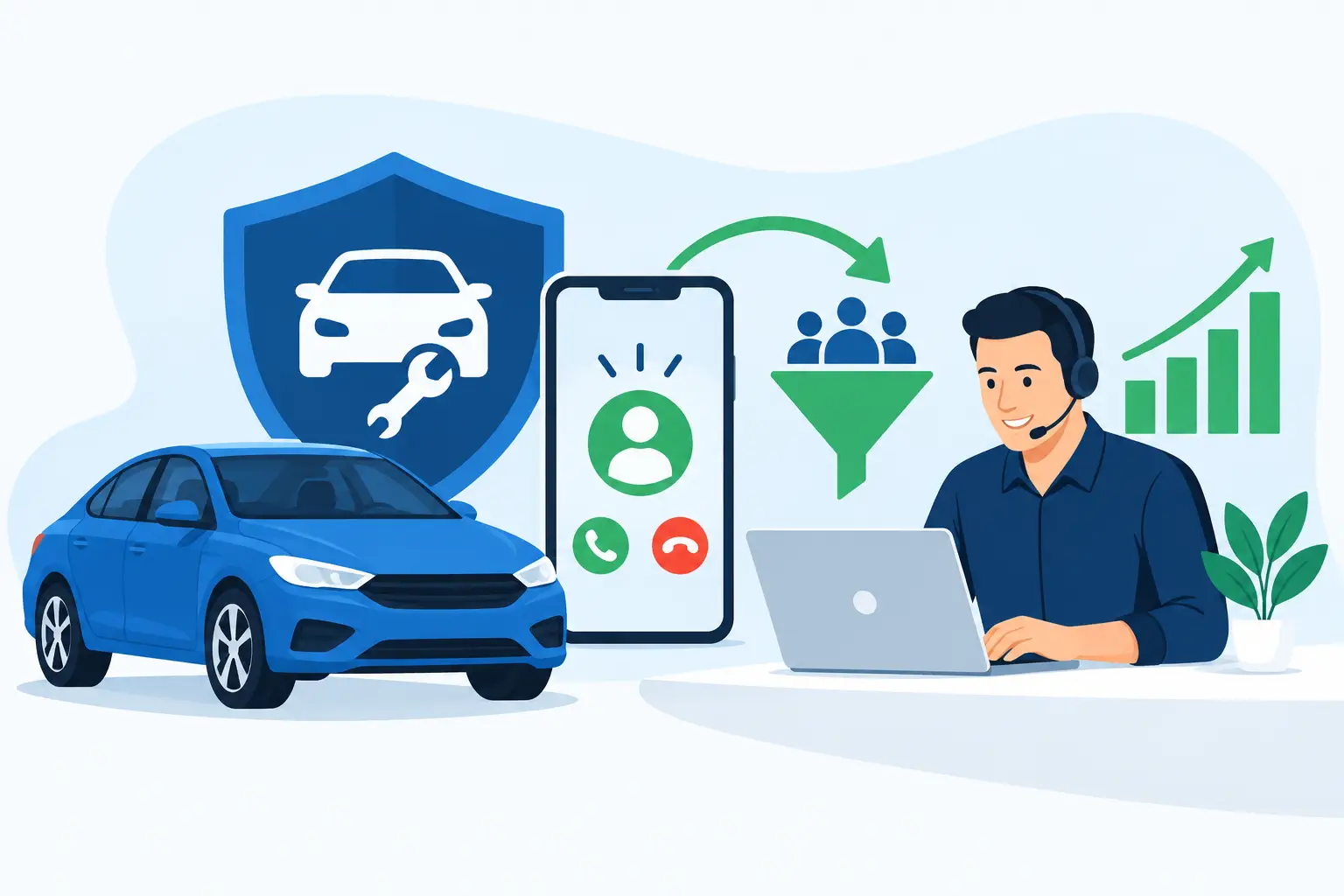
A warranty buyer who submitted a form 10 minutes ago is not the same opportunity as the same buyer called tomorrow morning. When you buy real time auto warranty leads, speed is part of the product. The lead source, screening logic, delivery method, and follow-up process all determine whether your sales team reaches a motivated consumer or wastes time chasing a stale record.
For agencies, call centers, and warranty sales organizations, the goal is not simply to add more records to the CRM. The goal is to keep qualified conversations moving into the dialer at a volume your team can contact, quote, and close profitably.
Why Real-Time Auto Warranty Leads Perform Differently
Auto warranty demand is driven by timing. Consumers often start shopping after a repair estimate, an expiring factory warranty, a dealer conversation, or concern about rising ownership costs. Their intent is highest when they are actively comparing coverage options. That window narrows quickly.
Real-time lead delivery puts the prospect in your workflow immediately after they request information. A strong program can send leads directly into your CRM, dialer, email workflow, or sales queue so your reps are not waiting on manual files or end-of-day reports. Faster response improves contact rates because the consumer still recognizes the inquiry and is prepared to discuss their vehicle.
That does not mean every real-time lead will close. Auto warranty sales still depend on eligibility, vehicle details, price, coverage fit, and the skill of the agent. But real-time delivery gives your team a better starting position than aged data alone. It reduces the gap between consumer intent and salesperson action.
What to Verify Before You Buy Real Time Auto Warranty Leads
Lead volume without qualification creates a staffing problem, not a growth strategy. Before you commit budget, get specific about what the lead includes and how the buyer journey begins.
Start with the source. Ask whether prospects are generated through owned landing pages, paid search, social campaigns, inbound calls, partner traffic, or other channels. Source transparency matters because different traffic sources produce different consumer expectations, intent levels, and contact behavior. A prospect requesting a quote is not equivalent to someone who entered a sweepstakes or responded to a broad promotional offer.
Next, review the data fields. At minimum, your sales team needs accurate contact information and the vehicle details required to begin qualification. Depending on your campaign, that may include year, make, model, mileage, ownership status, current coverage, and service history. More data is useful only if it is verified well enough to help agents move the conversation forward.
Exclusivity also deserves a direct answer. Exclusive leads can support stronger contact rates and a cleaner sales experience, but they generally cost more. Shared leads may work when your sales team has exceptional speed-to-call, aggressive dialing capacity, and a compelling offer. The right choice depends on your margin, close rate, and ability to contact prospects before competing buyers do.
Finally, define the filter criteria in writing. Geographic exclusions, vehicle age limits, mileage caps, duplicate rules, consumer consent language, and replacement policies should not be vague assumptions. Clear rules protect both the lead buyer and the supplier when volume scales.
Real-Time Does Not Mean Unmanaged
A lead arriving instantly can still fail if it lands in the wrong queue, waits for a callback, or gets passed between teams. Real-time campaigns need operational ownership. Someone must monitor delivery, response times, disposition patterns, and agent capacity from the first day.
If your agents cannot call within minutes, consider adjusting volume or adding live transfer calls for higher-intent opportunities. A live transfer can put a screened consumer directly in front of an available agent, reducing the risk that a hot inquiry turns cold in a callback queue. Internet leads and transfers can work together when each is routed to the right sales motion.
Build the Sales System Around Speed to Contact
The lead source gets the prospect interested. Your sales operation determines whether interest becomes revenue.
Set a clear response standard before launch. For many auto warranty campaigns, the first call should happen within minutes, followed by a disciplined multi-touch sequence across calls, text, and email where consent and compliance requirements allow. A single call attempt is not a follow-up strategy. Consumers are busy, skeptical of unknown numbers, and often comparing several providers at once.
Your first outreach should be direct. Confirm the consumer’s request, identify the vehicle, and move toward eligibility and coverage needs. Agents should not sound surprised by the lead or force the prospect to repeat everything they submitted. When your CRM displays the vehicle information and campaign source, the conversation feels more relevant from the first sentence.
Measure more than cost per lead. The metrics that matter include speed to first attempt, contact rate, qualified quote rate, close rate, cost per sale, cancellation rate, and revenue per issued contract. A cheap lead that produces low contacts or high cancellations is expensive. A higher-cost lead may be more profitable if it creates more qualified conversations and better retained revenue.
Match Volume to Your Capacity
Buying more leads than your team can work is one of the fastest ways to damage campaign economics. If 200 leads hit the system during peak hours and only a fraction receive rapid outreach, you are paying premium pricing for opportunities that age before your agents reach them.
Begin with a controlled volume that lets you evaluate lead quality and operational performance together. Track results by source, daypart, state, vehicle profile, and agent. Patterns appear quickly when reporting is clean. You may find that certain hours generate stronger answer rates, certain vehicle segments produce better approvals, or certain agents excel at particular campaign types.
Then scale based on the metric that matters: profitable issued business. Do not scale because a vendor can send more leads. Scale because your team can absorb more opportunities without losing speed, quality, or compliance control.
Lead Flow Partners approaches acquisition as a performance system, not a spreadsheet of names. The right campaign combines targeted media, practical filters, real-time delivery, and an execution plan built for the way your sales floor actually operates.
Know When Aged Leads Can Support the Mix
Real-time auto warranty leads are usually the best fit for immediate conversion efforts, but they do not have to carry your entire pipeline. Aged leads can give outbound teams lower-cost inventory for reactivation, nurture campaigns, and agents with available dialing capacity.
The trade-off is obvious: aged records typically require more persistence, tighter data hygiene, and lower expectations for immediate contact. They should be priced and managed differently from fresh inquiries. Treating them as interchangeable with real-time leads distorts your reporting and creates unrealistic expectations for your sales team.
A balanced acquisition strategy may use real-time leads to feed high-priority closers while aged data supports a dedicated reactivation team. The best mix depends on your staffing model, allowable acquisition cost, sales cycle, and appetite for volume.
Questions That Separate a Lead Vendor From a Growth Partner
Before launching, ask how leads are generated, what filters are available, whether records are exclusive or shared, and how duplicates are handled. Ask how delivery is monitored, what happens when volume spikes, and what reporting you will receive. Most importantly, ask whether the supplier understands the difference between sending records and helping a sales operation convert them.
A serious partner should be comfortable discussing cost per acquisition, not just cost per lead. They should want to know your target customer, geographic footprint, eligibility rules, sales hours, agent capacity, and conversion benchmarks. Those details are how a campaign gets better instead of merely bigger.
The winning move is simple: buy fresh opportunities only at a pace your team can contact fast, qualify correctly, and follow through on. When real-time delivery and sales execution operate as one system, auto warranty lead buying becomes a controllable path to more conversations, more quotes, and more profitable growth.