
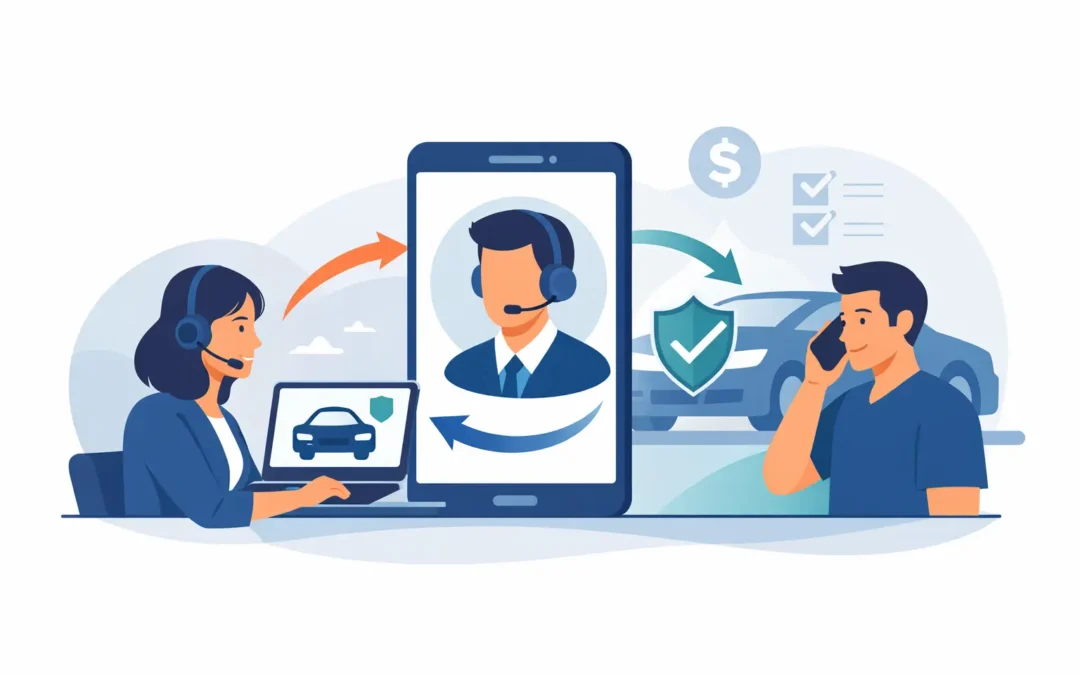
If your sales floor is still burning time on cold data, recycled leads, or slow follow-up, auto warranty live transfer calls change the math fast. Instead of paying reps to chase people who may or may not remember filling out a form, you get connected to consumers in real time while intent is still high and the conversation is still warm.
That difference matters in auto warranty because speed and contact quality drive revenue. This is a category where buyer hesitation is high, competition is aggressive, and lead decay happens quickly. If the prospect is not engaged when your team gets them, your conversion rate usually reflects it.
What auto warranty live transfer calls actually deliver
At a basic level, a live transfer is simple. A consumer responds to an ad, inbound campaign, or outbound qualification effort, gets screened by an agent, and is then transferred directly to your sales team. The value is not the transfer by itself. The value is what happens before the transfer.
A good live transfer program filters for intent, basic eligibility, and call readiness before your closer ever says hello. That means your team spends more time selling and less time qualifying. For high-volume call centers and lead buyers, that shift can improve talk time efficiency, reduce wasted labor, and tighten cost per acquisition.
Not all transfer calls are equal, though. Some vendors define a qualified transfer loosely. Others pass almost anyone with a pulse. If you buy auto warranty live transfer calls, the real question is not whether calls are coming in. It is whether those calls match your offer, your compliance standards, and your sales process.
Why auto warranty live transfer calls outperform cold leads
Cold leads create drag across the whole operation. Your reps spend the first half of the call reintroducing your company, rebuilding context, and trying to confirm whether the prospect even wanted information. That friction kills momentum.
Live transfers remove a chunk of that friction. The prospect is already on the phone. They have already expressed interest. In many cases, they have already answered basic qualifying questions. Your rep enters the call with attention instead of resistance.
That usually improves three core metrics. First, contact rate goes up because the contact already exists. Second, speed to lead becomes irrelevant because there is no delay between inquiry and conversation. Third, close rate often improves because your closer starts with a warmer prospect.
The trade-off is cost. Live transfers are typically more expensive than standard form leads or aged data. But lower unit cost does not mean lower acquisition cost. If cheaper leads waste rep time and produce weak close rates, the actual economics can look worse than a higher-priced transfer that converts.
The real buying criteria for transfer traffic
A lot of buyers focus on call volume first. That makes sense when you need to feed a sales team, but volume without control creates expensive chaos. In auto warranty, a better buying framework starts with intent, quality controls, and operational fit.
The first issue is qualification logic. You need to know what happens before the transfer. Was the consumer reached through inbound media, outbound dialing, or a blended approach? What questions were asked? Was vehicle ownership discussed? Was interest in coverage confirmed? Was consent captured where required? If those details are vague, the campaign usually gets vague results.
The second issue is exclusivity. Shared opportunities can still work in some channels, but live transfers tend to perform best when the buyer gets a clear shot at the consumer. If the same consumer is being circulated across multiple sellers, the advantage of a real-time transfer drops quickly.
The third issue is call routing and speed. If calls sit in queue, hit undertrained agents, or route to teams with inconsistent availability, lead quality gets blamed for what is really an operations problem. Strong transfer performance depends on both sides of the handoff. Media and qualification matter, but so do staffing, hours, scripts, and answer rates.
What a high-performing auto warranty campaign looks like
The best campaigns are built backward from sales outcomes. They do not start with traffic volume. They start with the kind of customer your closers can actually convert.
That means aligning media targeting, qualification, and transfer criteria with your offer. If your program performs best with certain vehicle age bands, ownership profiles, or geographic pockets, your lead source should reflect that. Broad traffic may fill lines, but precision usually protects margin.
It also means controlling the caller experience. The transfer agent should set expectations correctly, confirm interest clearly, and avoid overpromising. A prospect who feels tricked before the transfer is harder to close, even if they technically qualify.
On the buyer side, consistency matters just as much. If your team answers fast, follows a disciplined script, and gets to the value proposition quickly, live transfers can become one of the most efficient channels in the mix. If your intake is sloppy, the same traffic can underperform.
Common failure points that kill ROI
The most common problem is buying on price alone. Cheap calls often carry hidden costs in weak qualification, poor targeting, or low transfer integrity. You may pay less per call and more per sale.
Another issue is misalignment between vendor and buyer definitions of quality. One side may count a connected caller as a valid transfer. The other may expect a verified vehicle owner actively seeking coverage. If those standards are not defined before launch, disputes are almost guaranteed.
There is also the compliance factor. Auto warranty is a heavily scrutinized space. If your traffic source uses questionable outreach methods, aggressive messaging, or poor consent practices, that risk does not stay with the vendor. It can land on the buyer. Serious lead partners understand that scale only matters if it is sustainable.
Finally, many buyers ignore operational readiness. If your average speed to answer is weak, if transfers hit voicemail, or if your sales floor cannot handle peak periods, campaign performance will suffer no matter how good the source is.
How to evaluate auto warranty live transfer calls before scaling
Start small, but test with discipline. A short pilot can tell you a lot if you are tracking the right numbers. Look beyond transfer count and cost per call. Measure answer rate, average talk time, qualification rate, close rate, and cost per acquisition. Those numbers tell the real story.
Listen to calls. This sounds obvious, but many buyers skip it. Call reviews quickly reveal whether the issue is source quality, transfer setup, or sales execution. You can hear if the prospect was genuinely engaged, whether qualification was clear, and how well your reps handled the handoff.
Ask how traffic is generated and controlled. You do not need every proprietary detail, but you do need transparency around channel mix, targeting logic, compliance process, and fulfillment capacity. Reliable partners can explain how they generate demand, how they pre-screen callers, and how they maintain consistency when volume increases.
Then look at scale readiness. A source that performs at 20 calls a day may not perform the same way at 200. Quality control, staffing depth, and routing infrastructure matter more as volume rises. This is where experienced suppliers separate themselves from brokers who are just reselling traffic.
Where this channel fits in a larger acquisition mix
Live transfers should not always replace every other lead source. In many operations, they work best as the high-intent layer inside a broader acquisition model. Real-time internet leads, aged leads, retargeting, and outbound data all have a role depending on your margins, sales process, and staffing model.
But if your goal is to put closers in front of ready-to-talk consumers faster, live transfers deserve serious budget. They reduce lag, improve rep productivity, and create a cleaner path from inquiry to sale. For agencies, call centers, and lead buyers trying to stabilize volume without sacrificing efficiency, that is a meaningful advantage.
The best results come from pairing quality supply with tight operations. When media buying, screening, routing, and sales execution are all aligned, auto warranty live transfer calls become more than a lead source. They become a revenue engine.
That is the standard serious buyers should hold. Not just more calls, but better conversations with a real chance to convert. If the channel is not doing that, it is not built well enough yet.


Recent Comments