
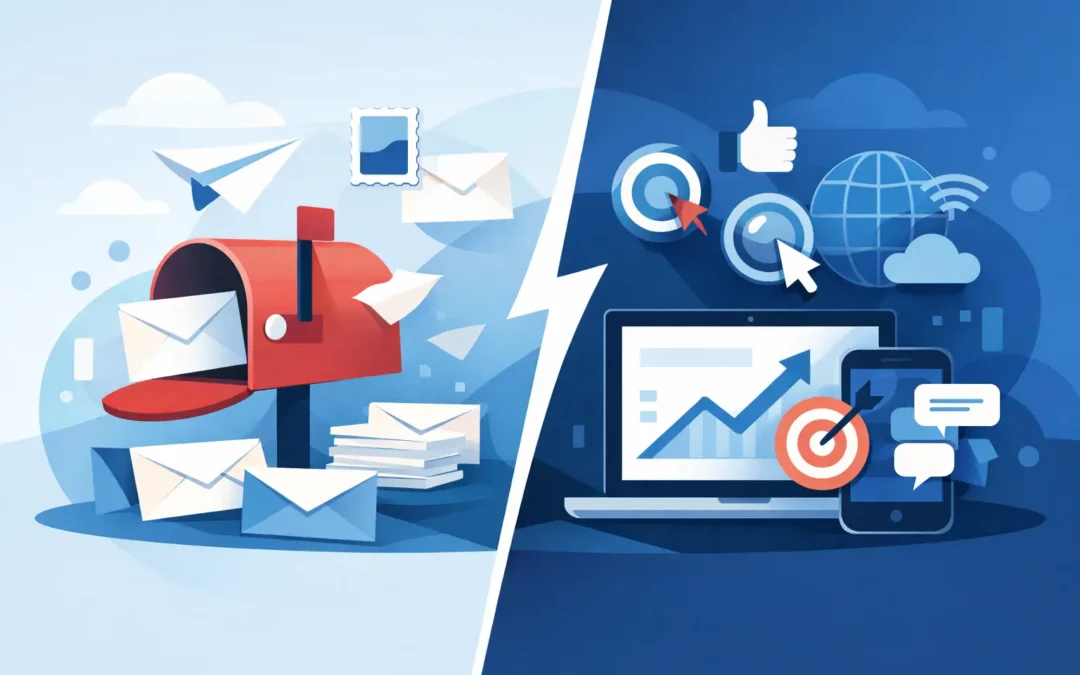
A lead buyer missing monthly volume does not need another channel debate. They need appointments, live conversations, applications, and closed deals. The real question behind direct mail versus digital leads is not which channel is better in theory. It is which channel can deliver the right prospect, at the right cost, in a form your sales team can convert.
For high-value verticals such as insurance, mortgage, debt settlement, solar, auto finance, legal, and business funding, both channels can produce profitable acquisition. They also create very different operating conditions. Digital can move fast and scale quickly. Direct mail can create tangible demand, reach audiences digital campaigns miss, and generate a stronger signal of intent when the offer is built correctly.
The winning strategy comes from matching the channel to your economics, sales process, compliance requirements, and capacity to follow up.
Direct Mail Versus Digital Leads: The Core Difference
Digital leads are generated through online channels such as paid search, social media, display advertising, landing pages, SMS, and publisher networks. A prospect sees an offer, submits information, requests a quote, or calls. The data can be delivered in real time, allowing sales teams to contact the lead within seconds or transfer the call live.
Direct mail starts with a physical offer delivered to a targeted household or business. The recipient responds through a call, form, QR code, reply card, or dedicated landing page. The response may be less immediate than a digital click, but the person has had to receive, review, and act on a tangible message. That extra step can produce a different kind of buyer behavior.
Neither channel is automatically high intent. A poorly targeted mail drop can create weak responses just as easily as a broad digital campaign can create cheap, low-quality form fills. Quality comes from the audience, offer, qualification process, speed to contact, and how well the campaign aligns with the sales outcome.
Where Digital Leads Win
Digital lead generation is built for speed. A campaign can launch, collect performance data, and be optimized within days. If a call center has open capacity or a sales team needs leads this week, real-time internet leads and live transfers can put opportunities in front of agents immediately.
That speed matters in competitive categories. A consumer searching for auto insurance, debt relief, mortgage options, or funding has often entered an active buying window. When an agent connects with that prospect while interest is high, the odds of starting a meaningful sales conversation improve.
Digital also offers more granular optimization. Media buyers can test creative, audiences, placements, landing pages, call scripts, and qualification questions. They can identify which sources drive funded deals rather than simply cheap leads. For buyers with accurate downstream reporting, this feedback loop is a major advantage.
The trade-off is competition. Many digital prospects are comparison shopping, and some may submit forms across several advertisers within minutes. If your team cannot contact leads fast, your cost per acquisition can rise quickly. A $20 lead is not cheap if it sits untouched for an hour, reaches voicemail twice, and gets called after three competing vendors have already spoken with the prospect.
Digital leads work best when your operation has rapid response, enough agent capacity, and disciplined source-level reporting. Live transfers are especially effective when the objective is immediate engagement and the team can handle calls without delay.
Digital lead risk: Volume can hide waste
High volume can make a weak digital campaign look healthy. A buyer sees hundreds of leads arriving and assumes growth is happening. Meanwhile, contact rates decline, agents complain about duplicate inquiries, and conversions fail to keep pace with spend.
The fix is not simply demanding lower lead prices. Track the numbers that determine profitability: contact rate, qualification rate, appointment rate, close rate, revenue per lead, and cost per acquired customer. Digital should be measured against closed-business outcomes, not form volume.
Where Direct Mail Wins
Direct mail gives sales organizations something digital often cannot: controlled access to a tightly defined audience with less online noise. With the right data, an offer can be delivered to consumers or businesses that meet specific credit, property, demographic, geographic, life-event, or financial criteria.
That makes direct mail valuable in verticals where the offer requires trust, explanation, or consideration. A homeowner reviewing a solar offer, a consumer evaluating debt settlement, or a borrower considering a mortgage-related product may respond better to a tangible piece that feels more substantial than another online ad.
Mail can also reach audiences that are hard to capture through paid digital media. Some prospects do not actively search, rarely engage with social ads, or have become resistant to online advertising. A well-timed direct mail offer can create demand before the prospect begins shopping.
Response timing is one of direct mail’s strongest advantages. A campaign often generates calls and form submissions over a response window rather than producing a single burst of leads. That can help organizations forecast staffing, manage follow-up, and maintain a steadier pipeline.
Direct mail is not a shortcut. It requires upfront planning, data discipline, creative that earns attention, production time, and a clear method for capturing responses. It is usually less flexible than digital when an offer needs to be changed immediately. But for buyers who want exclusive opportunities and a more deliberate prospect journey, it can deliver strong economics.
Direct mail risk: Better targeting does not excuse weak follow-up
A physical mailer can create a high-value response, but that opportunity still has a short shelf life. If the prospect calls and waits on hold, or submits a form without receiving a fast response, the advantage disappears.
Treat direct mail responders as active buyers. Route calls to trained agents, trigger instant follow-up on online responses, and use a clear script that connects the offer on the mail piece to the next step. The campaign is only as good as the operational system behind it.
Compare Cost by Acquisition, Not Cost Per Lead
This is where many channel decisions go wrong. Digital leads may appear less expensive because the lead is produced quickly and priced individually. Direct mail may appear more expensive because campaign costs include data, printing, postage, creative, tracking, and response management.
Those surface comparisons are incomplete. The only meaningful question is what each channel produces after contact, qualification, sales activity, and revenue are accounted for.
A direct mail response that costs more but closes at twice the rate may be the better buy. A real-time digital lead that costs less but is shared, unresponsive, or poorly qualified may become the more expensive source after agent time and wasted dial attempts are included.
Build channel reporting around a common scorecard. Every source should be evaluated on lead cost, speed to first contact, contact rate, qualified rate, conversion rate, customer value, cancellation or chargeback rate, and net acquisition cost. If you cannot see those numbers by campaign and source, you are managing volume instead of performance.
How to Choose the Right Mix
The decision depends on what your organization needs now. If you have trained agents waiting for conversations and need immediate volume, digital leads and inbound live transfers are often the fastest path. If you want to penetrate a defined market, reach less digitally active prospects, or create demand around a higher-consideration offer, direct mail deserves serious budget.
For many sales-driven organizations, the better answer is not choosing one. It is building a channel mix that prevents dependency on any single source. Digital can provide immediate demand and rapid testing. Direct mail can create targeted, proprietary response volume that is less exposed to auction volatility and online competition.
Use direct mail to target specific segments and geography. Use digital to capture active shoppers, retarget responders, and fill gaps in volume. When both channels feed a consistent qualification and follow-up process, your team can compare performance fairly and shift budget toward what is producing profitable customers.
Lead Flow Partners approaches acquisition as an execution problem, not a media preference. The right campaign combines audience quality, delivery speed, sales readiness, and transparent performance measurement. A lead source should support your revenue target, not create another operational headache.
The Sales Process Decides the Winner
The channel matters, but sales execution decides whether the campaign pays. A five-minute response standard can outperform a thirty-minute response standard. A live transfer team with clear eligibility criteria can outperform a larger batch-lead program. A direct mail campaign with an offer-specific call script can outperform a generic inbound setup.
Before increasing spend, pressure-test your operation. Can agents answer more calls? Are leads assigned instantly? Does the CRM show every contact attempt and outcome? Do managers know which sources produce revenue, not just activity? If those answers are unclear, adding more leads will only make inefficiency more expensive.
The best channel is the one your team can convert profitably and repeatedly. Start with the audience and economics, demand proof from downstream results, and scale only after your sales operation can keep up with the opportunity.


Recent Comments